Q-SYS Audio and Conferencing for Four Hotel Meeting Rooms — Riyadh
Al Thulathiya General Information Technology Company — ATIT (main contractor) Sector: Hospitality — hotel meeting and conference rooms Location: Riyadh, Saudi Arabia Scope: four rooms across three floors Audio: networked Q-SYS processing · 18 ceiling loudspeakers · Shure wireless microphones · echo cancellation for hybrid meetings · touch-panel control Display and conferencing: indoor LED wall · 98-inch and 65-inch displays · Barco ClickShare wireless presentation · Poly 4K cameras · Microsoft Teams Room Contract duration: 4 weeks Warranty: 3 years on the audio system Out of scope: electrical and civil works
Description
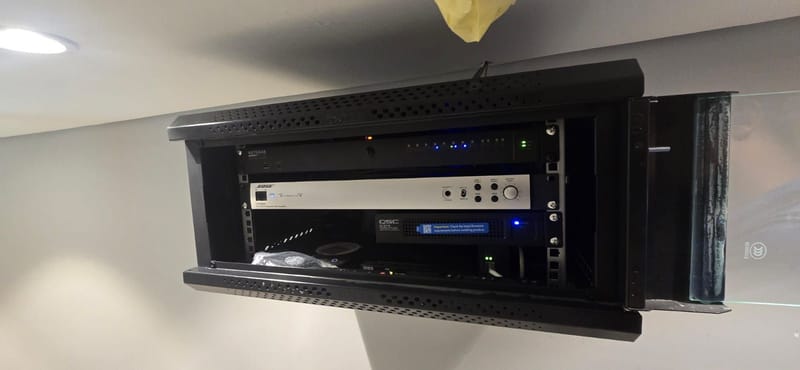
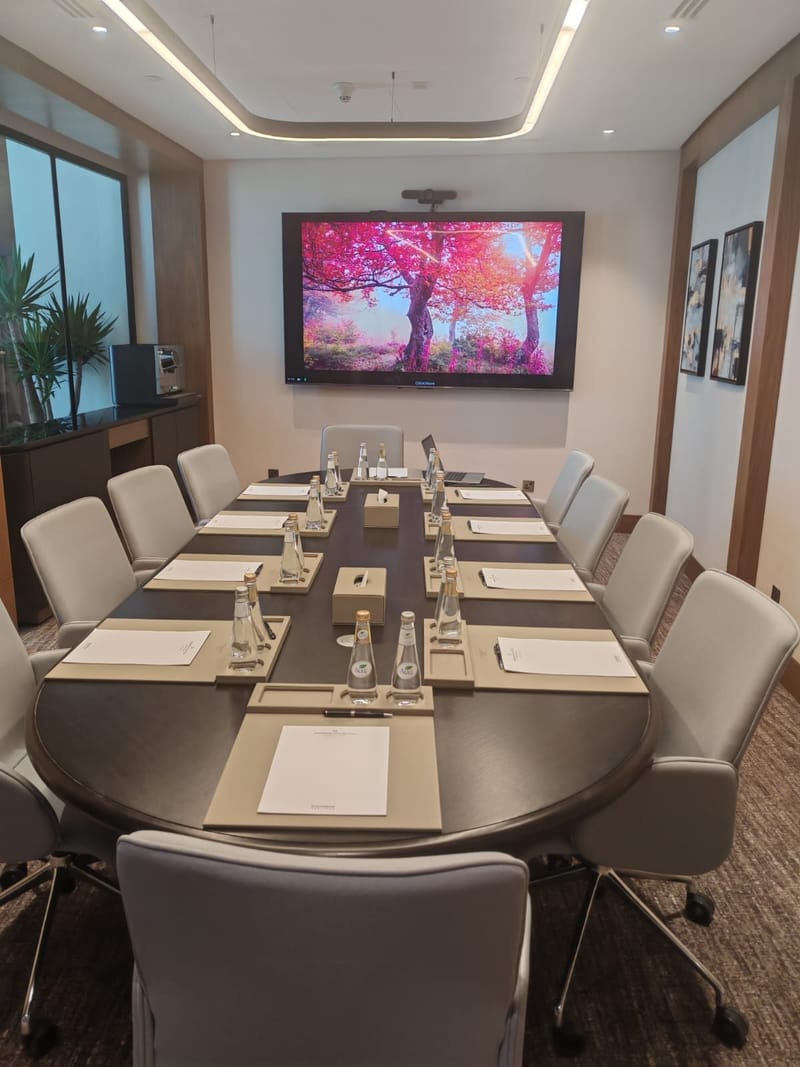
Fast Vision delivered the audio, conferencing and display systems for four rooms in a hotel project in Riyadh, for Al Thulathyah Alamah Information Technology (ATIT) as main contractor. Audio carried the weight of the project: two QSC Core 8 Flex processors with onboard acoustic echo cancellation, eighteen QSC SF 26CT ceiling loudspeakers, two Extron XPA U 2004 FX amplifiers and a complete Shure wireless microphone system — with a different acoustic design for each room according to its function, rather than one design copied four times.
The Four Rooms
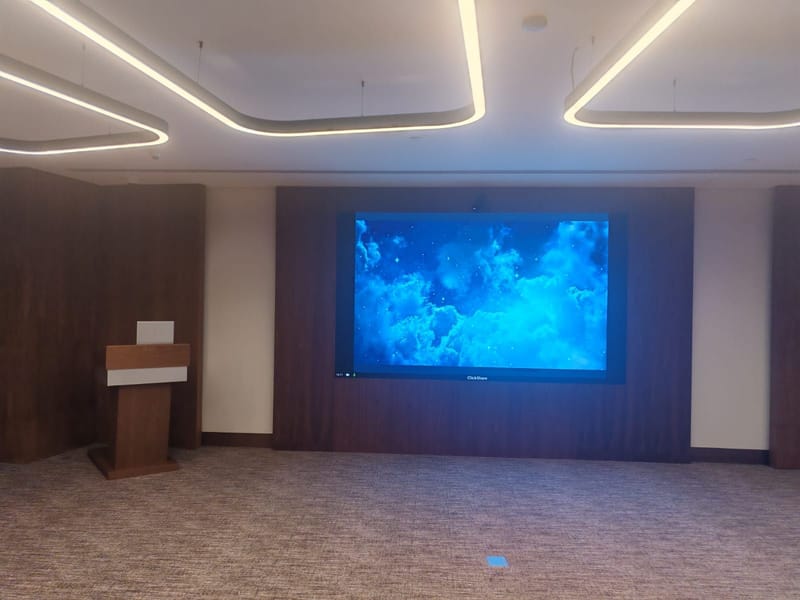
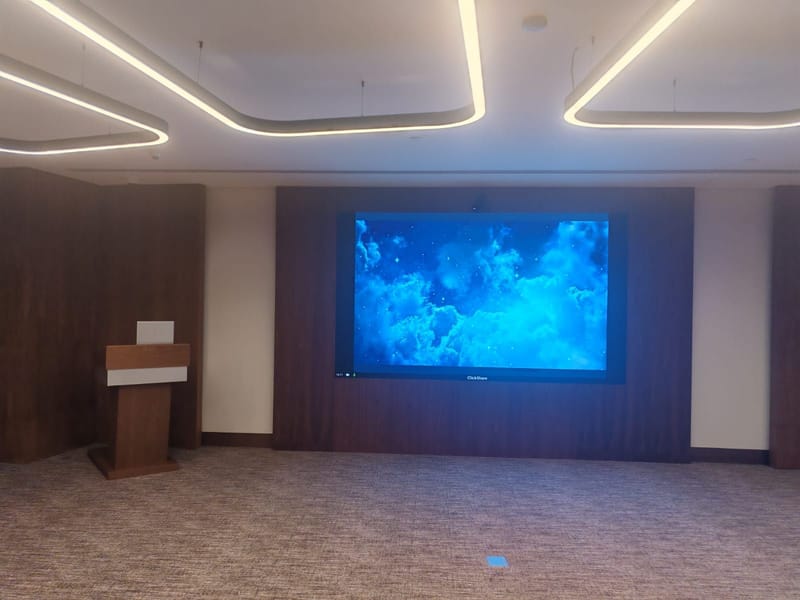
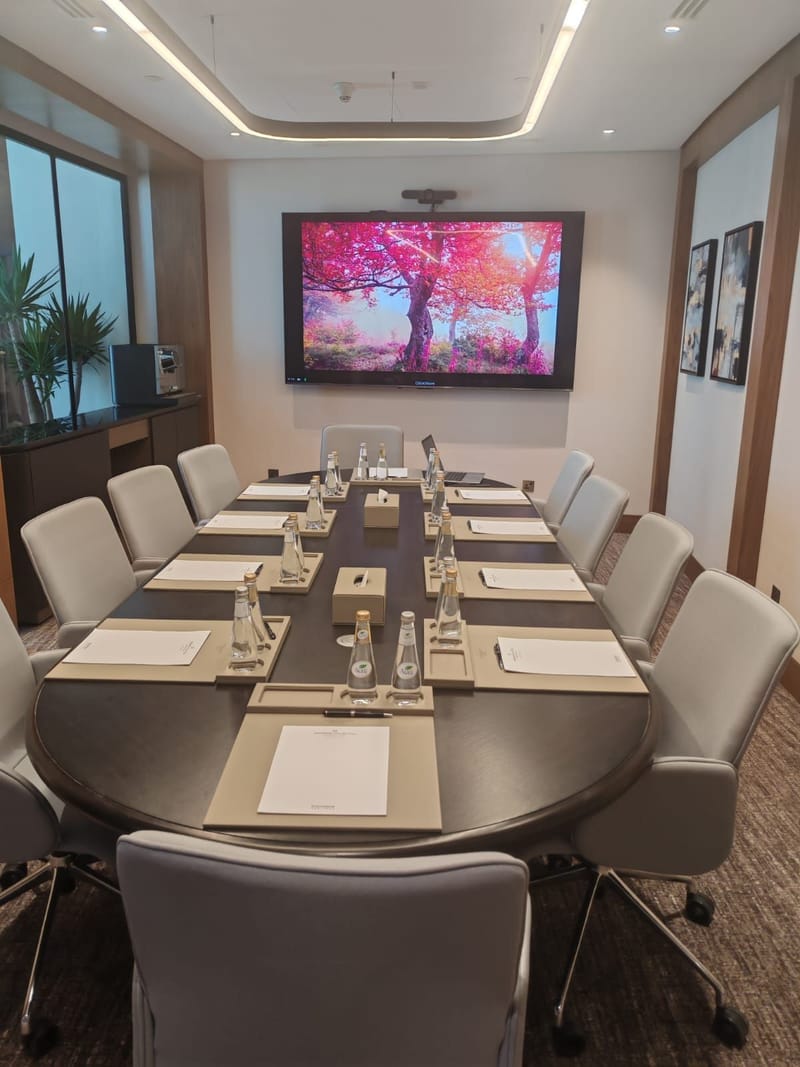
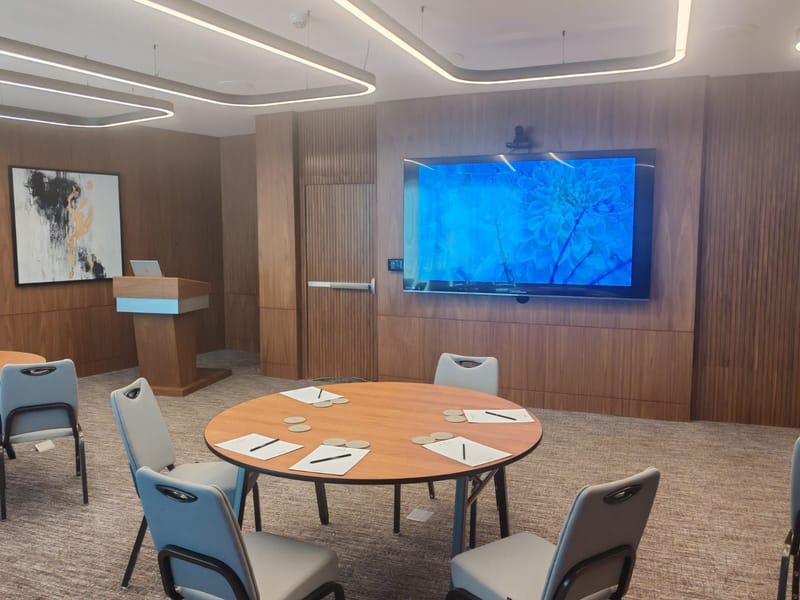
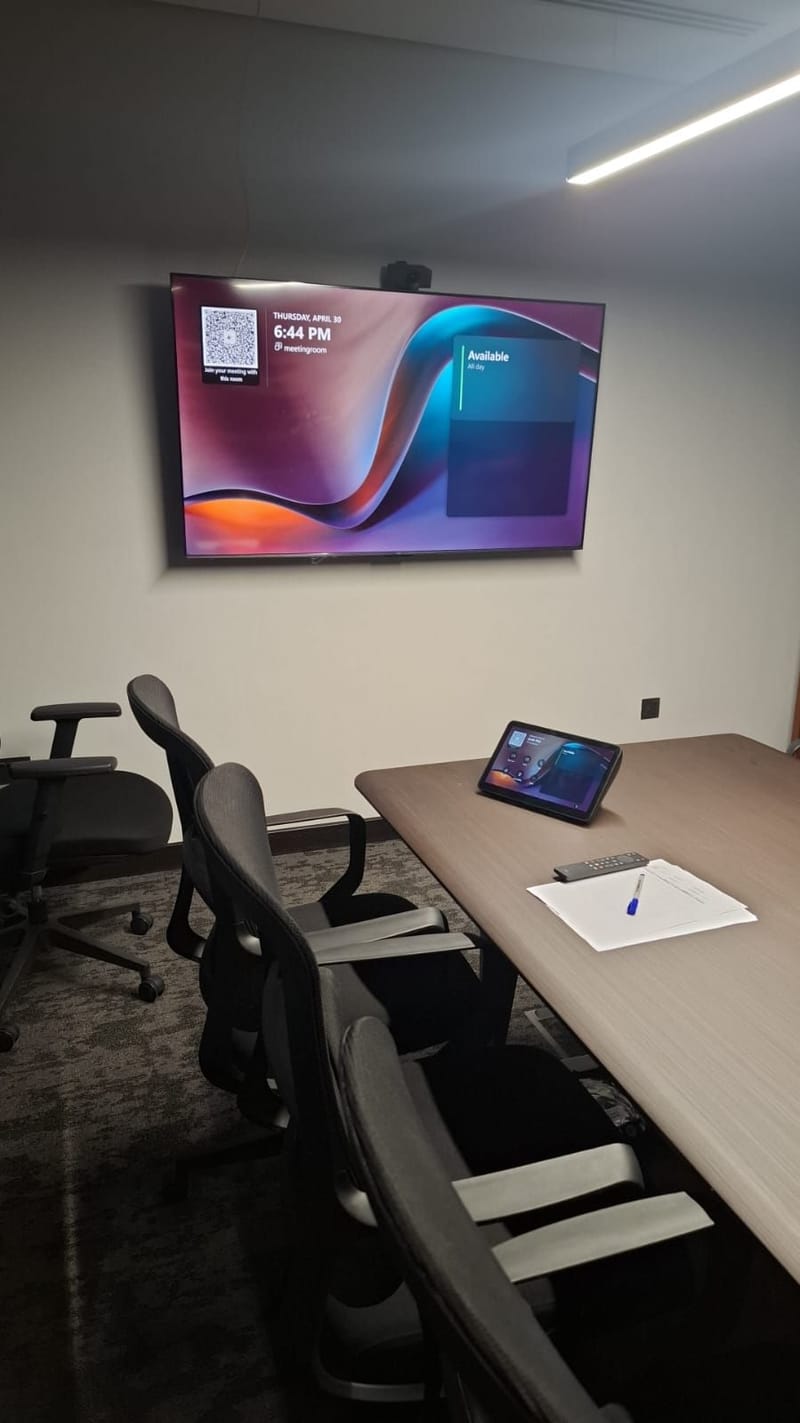
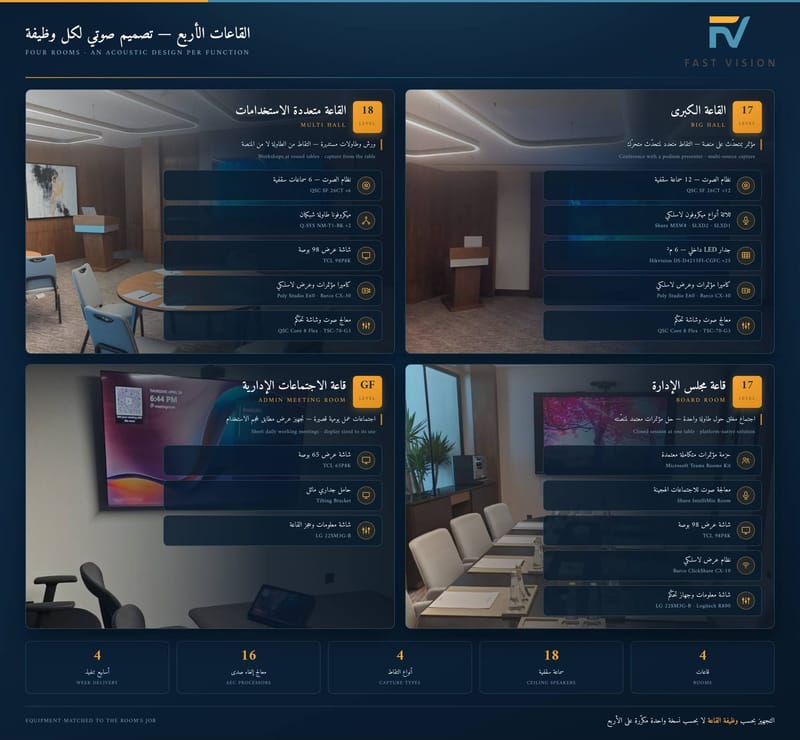
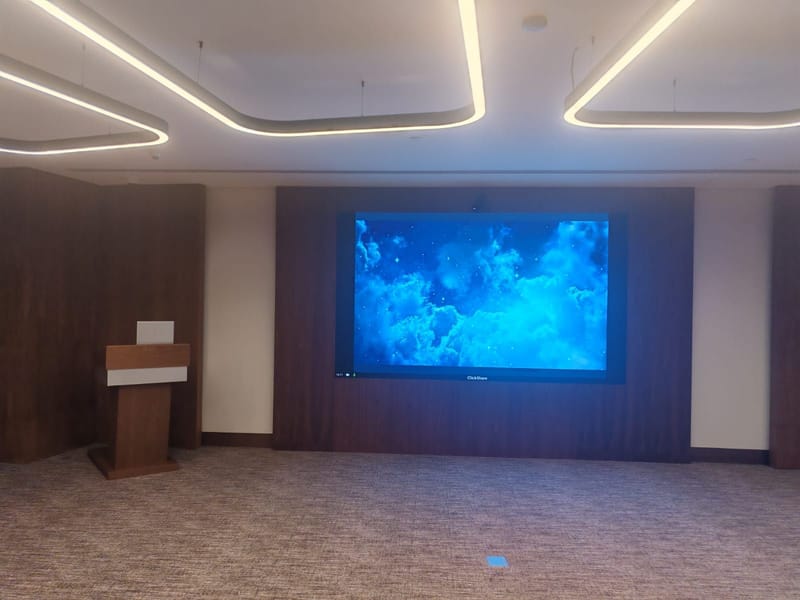
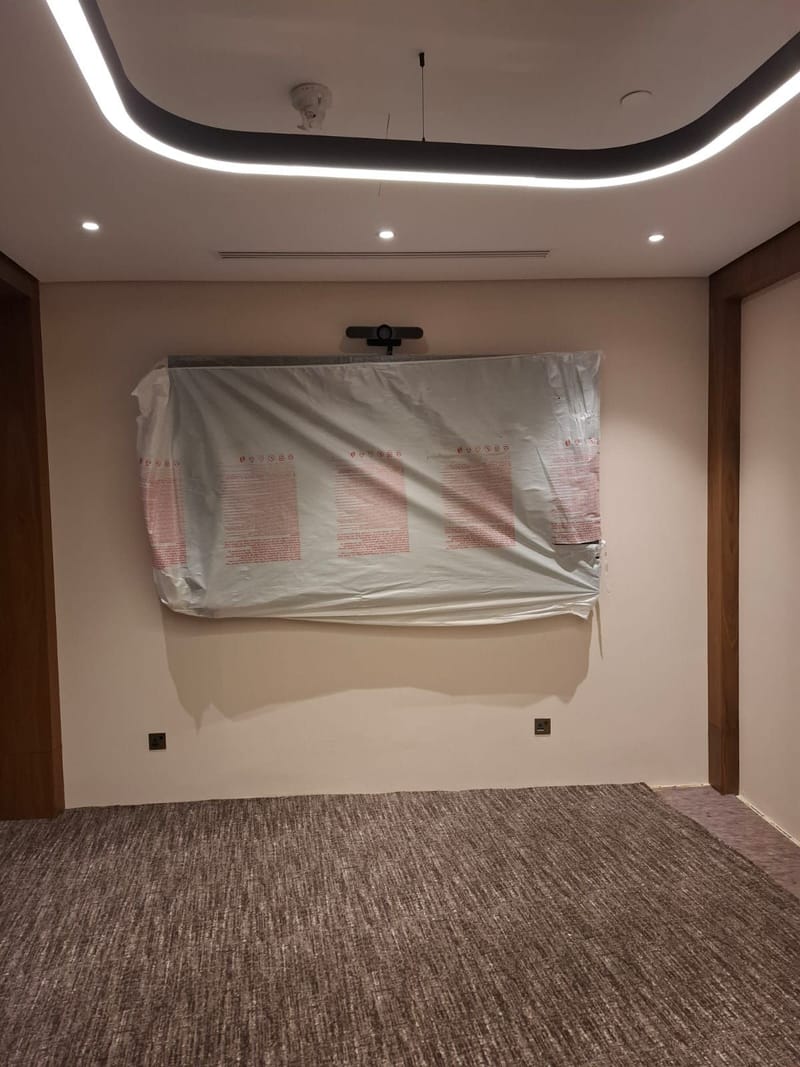
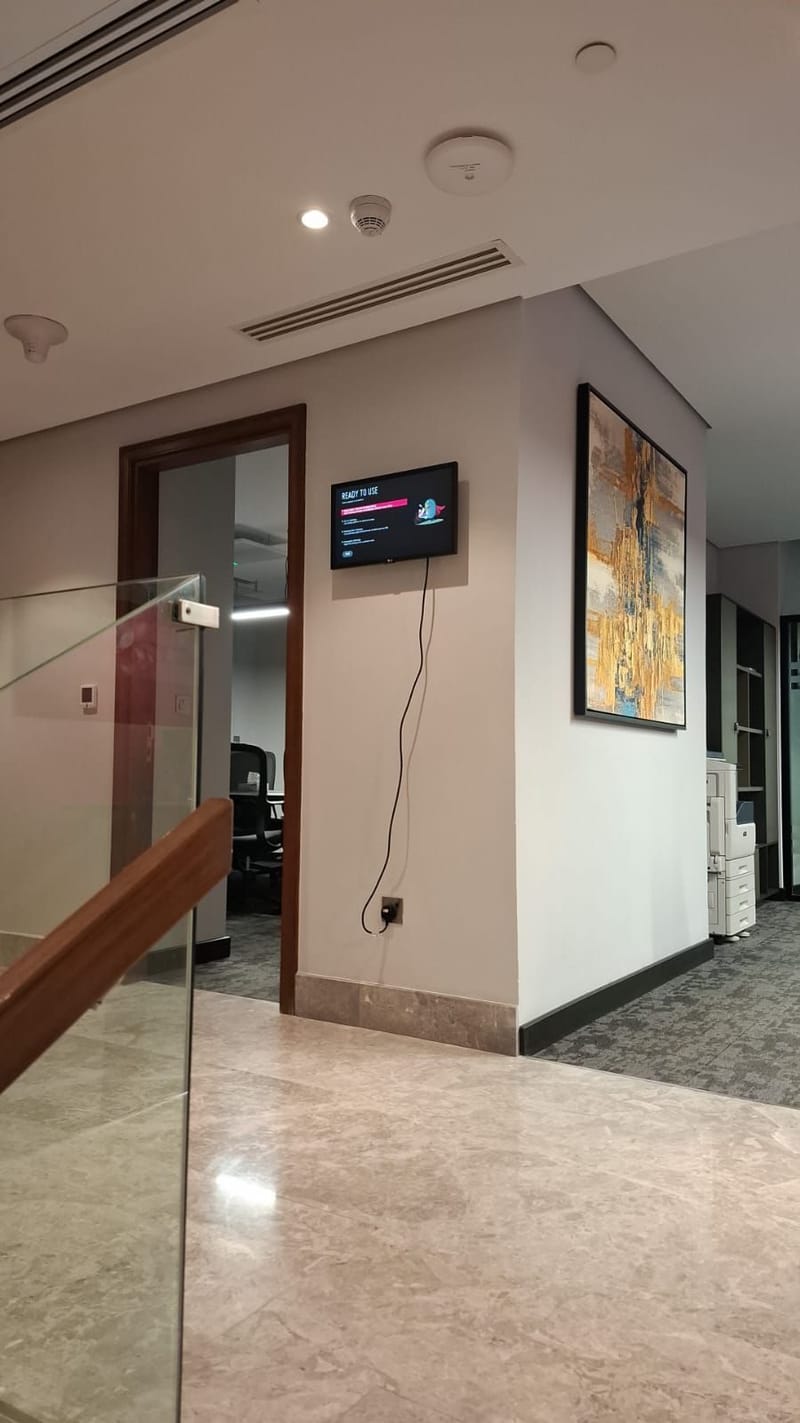
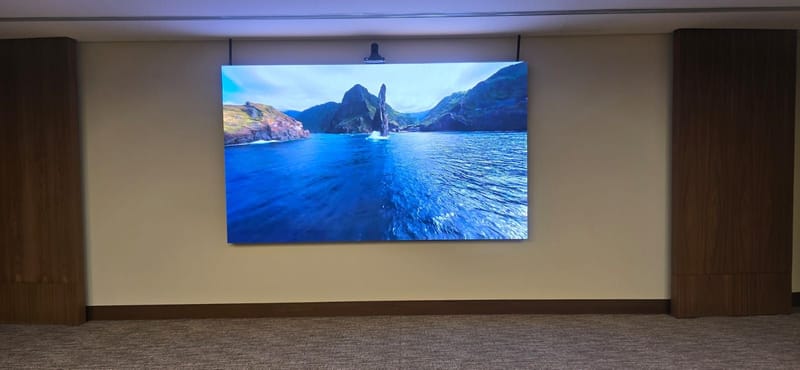
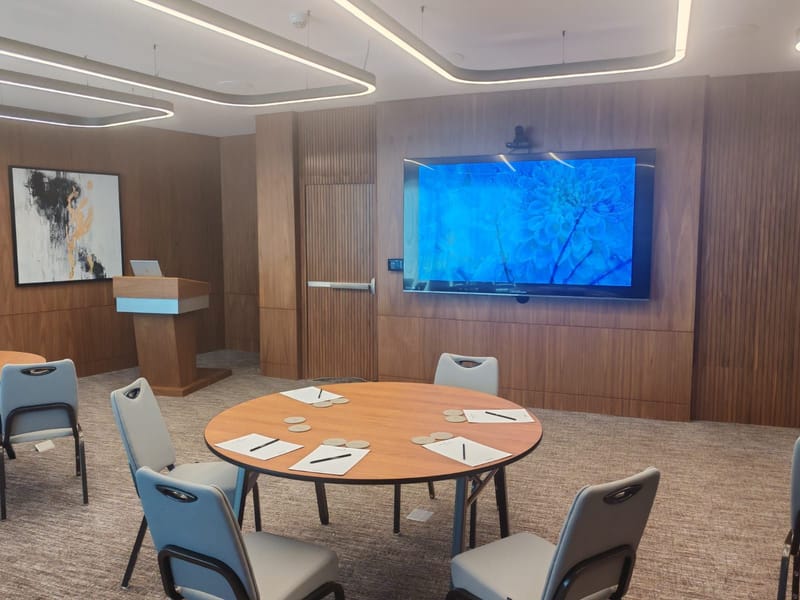
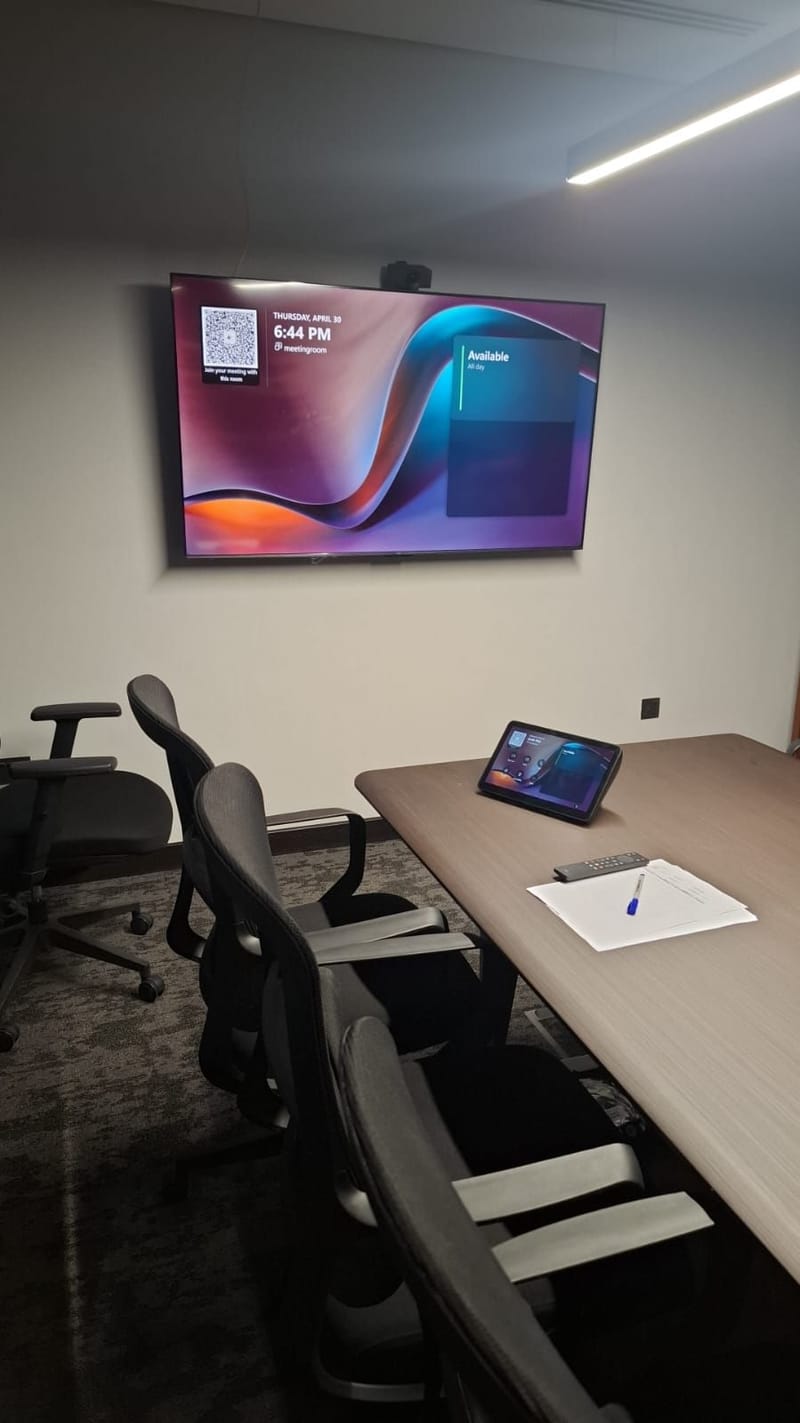
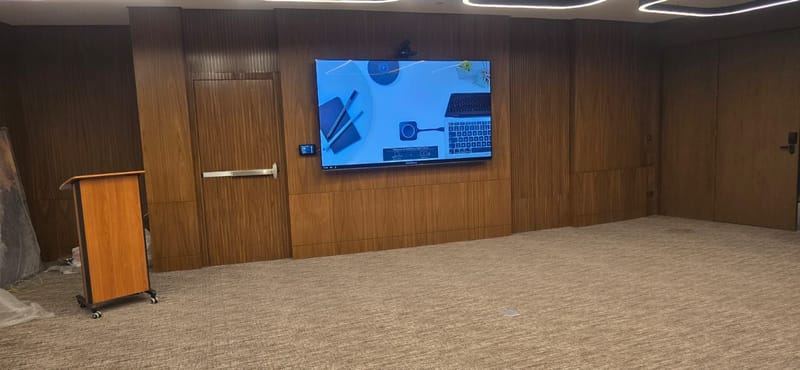
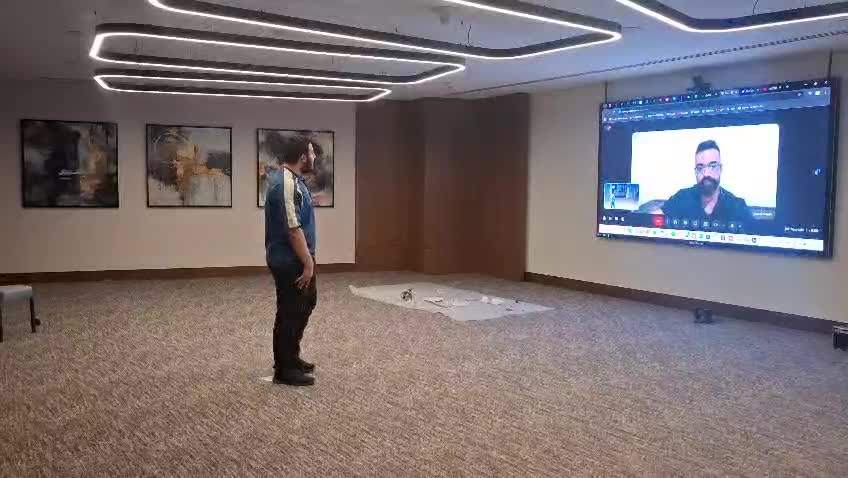
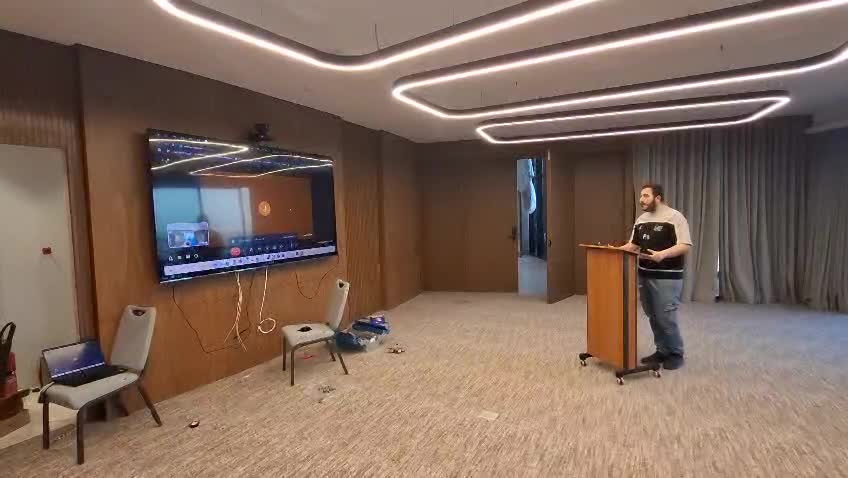
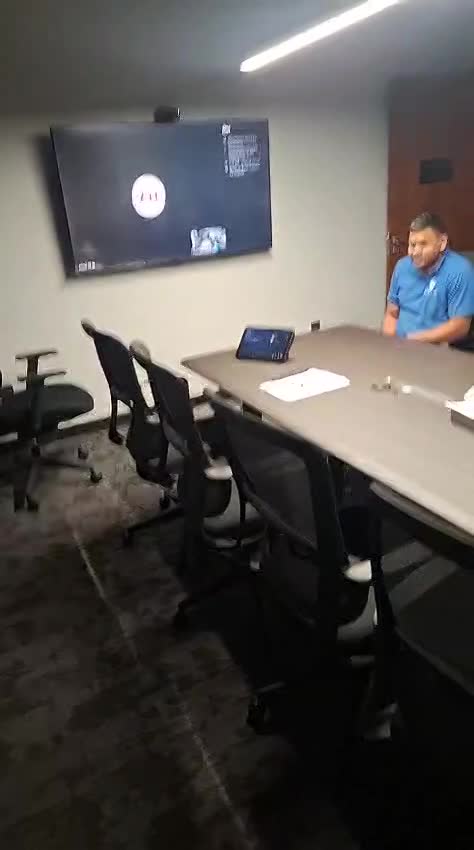
(1) Big Hall: indoor LED wall · 12 ceiling loudspeakers · Q-SYS processor · three wireless microphone types · conferencing camera · wireless presentation (2) Multi Hall: 98" display · 6 ceiling loudspeakers · Q-SYS processor · two networked table microphones · conferencing camera · wireless presentation (3) Board Room: 98" display · Microsoft Teams Rooms kit · wireless presentation Ground Floor — Admin Meeting: 65" display · information displays
The Challenge — Built Around Audio
A hotel meeting room is measured by one hard test: did the meeting go the way its host intended? Picture rarely ruins a meeting — audio does. This project brought four audio challenges together at once. First: hybrid meetings and far-end echo. When people in the room meet with remote participants, the room microphone picks up the sound of the room's own loudspeakers and sends it back — so the remote speaker hears their own voice returned a fraction of a second later. This is not cosmetic: it breaks a meeting within two minutes, and it is the single biggest reason people abandon a room and go back to their laptops. The only real answer is echo cancellation inside the audio processor, not inside the conferencing software. Second: four rooms with four different jobs. The Big Hall hosts a conference with a presenter at a podium facing an audience. The Multi Hall hosts workshops at round tables with discussion among attendees. The Board Room hosts a closed session for a limited group around one table. The Admin room hosts short daily working meetings. Four functions mean four capture methods and four coverage densities — and copying the same design across all four produces one over-specified room and one under-served. Third: speech intelligibility in a hotel room. Hotel function rooms are large volumes with high ceilings and mixed surfaces — carpet that absorbs, timber walls that reflect, glass that bounces. Distribution there is not a question of power but of coverage: every seat must hear at close to the same level, or the operator raises the volume until the back can hear, punishing the front and increasing reflections. Fourth: operation by hotel staff. The room is set up by an events coordinator minutes before guests arrive, not by a sound engineer. If operation is not a button on a screen, every event starts with fifteen wasted minutes.
The Solution
Three Acoustic Designs for Three Functions
The Solution — What Ties the Rooms Together
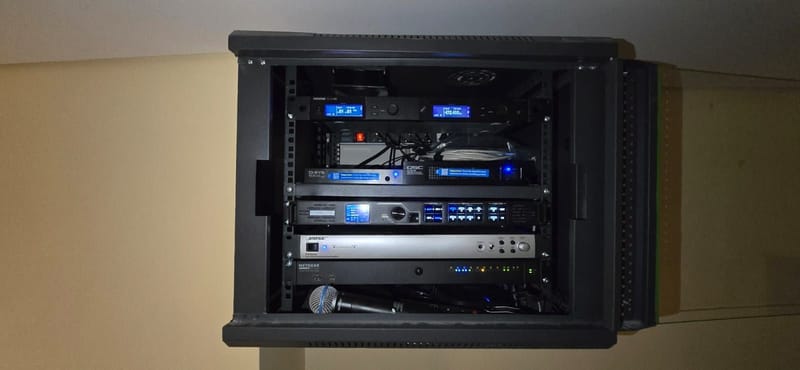
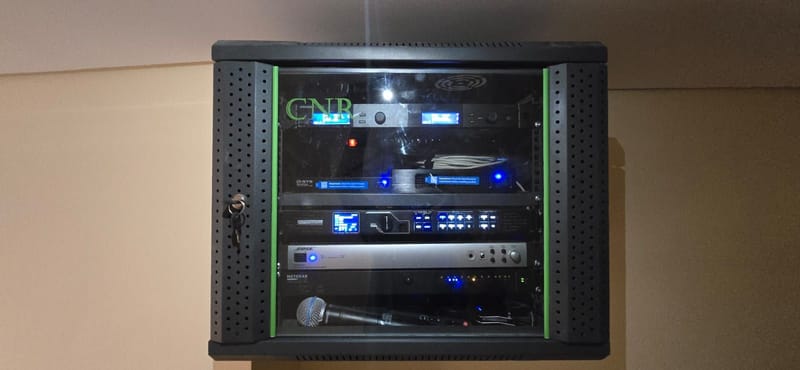
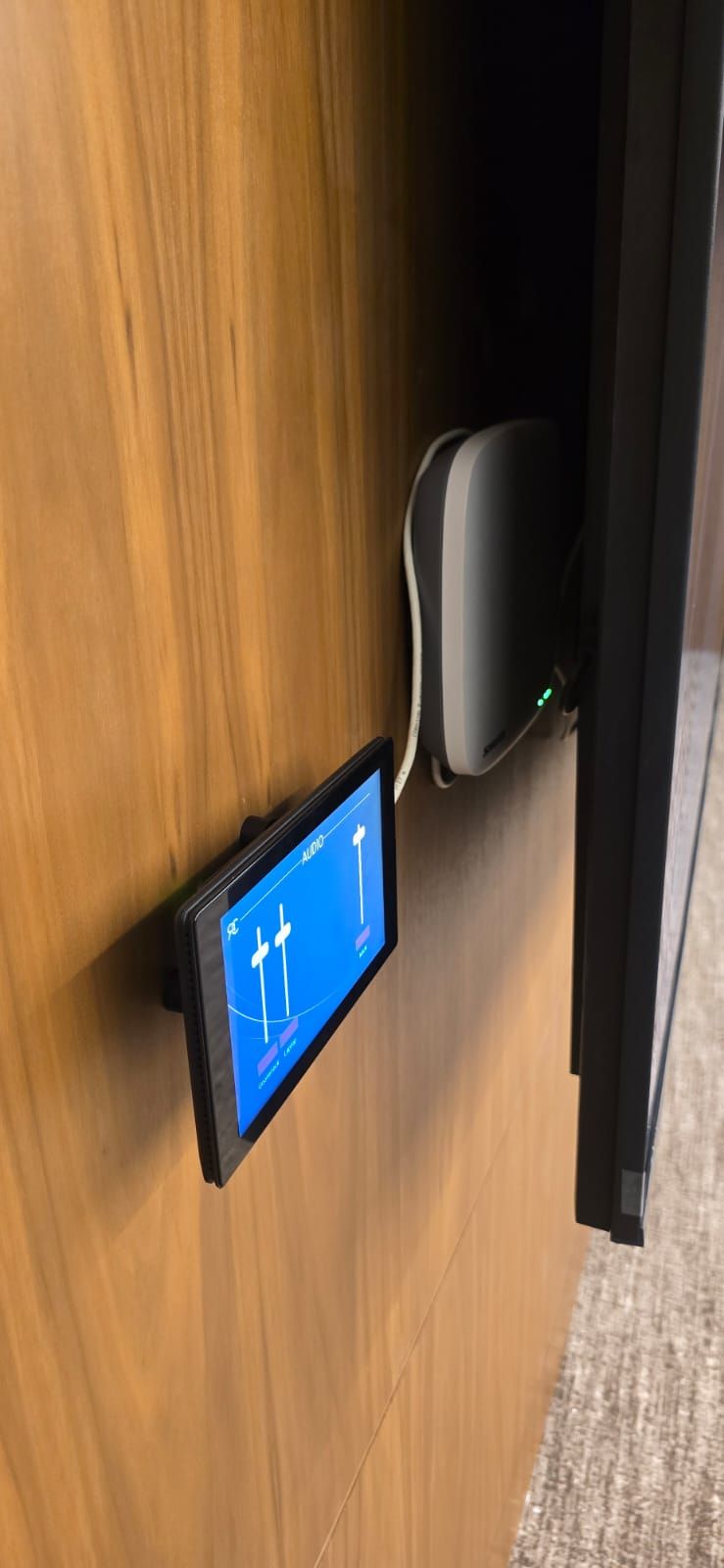
Echo cancellation — where the hybrid meeting is won. Each Core 8 Flex carries eight independent AEC processors. In practice: the system knows what it sent to the loudspeakers and subtracts it from the signal the microphone picked up before that signal reaches the far end. The result is that the remote participant hears the room cleanly and does not hear themselves. Having eight processors rather than one means each microphone group is treated separately, so quality holds no matter how many capture sources are live. Ceiling distribution instead of front-of-room loudspeakers. In both main halls sound was distributed across the ceiling rather than concentrated at the front. The logic: a front-facing loudspeaker is loud in the first rows and weak at the back, forcing the operator to raise the level until the back can hear — punishing the front, increasing reflections and pushing the system towards the edge of feedback. Ceiling distribution places almost every seat at a similar distance from the nearest loudspeaker, so sound arrives at a comparable and relatively low level — and that lower level is itself what protects against both reflection and feedback. Software routing instead of re-cabling. The Core 8 Flex is a networked platform carrying 64×64 networked audio channels alongside its local I/O, with USB AV bridging, a Dante licence and control ports. Every source and every destination is routed in software — so changing a room from conference mode to workshop mode became a change of configuration, not of wiring. Wireless microphone management. The Shure Microflex Wireless system in the Big Hall runs through an MXWAPX4 access point and an MXWNDX4 networked charging and management station. The point here is operational rather than acoustic: hotel staff return microphones to their dock after an event and they charge and are managed from the network, instead of hand-managing batteries before every meeting — a detail forgotten at design stage and paid for daily in operation. Control — a touch screen, not a technician's panel. Two 7" QSC TSC-70-G3 in-wall PoE touch controllers in the two main halls give hotel staff a single interface: pick the room mode, start the source, set the level, join the meeting. Everything beneath that interface — source routing, mix levels, echo cancellation settings, per-microphone gain — is set and stored at handover and never touched. An independent AV network. Two QSC NS10-125+ managed switches were installed dedicated to AV traffic, with three Q-SYS NV-21-HU networked video endpoints. This is an important design point: the AV network is built independent and tuned, not loaded onto the hotel's general guest network.
Execution
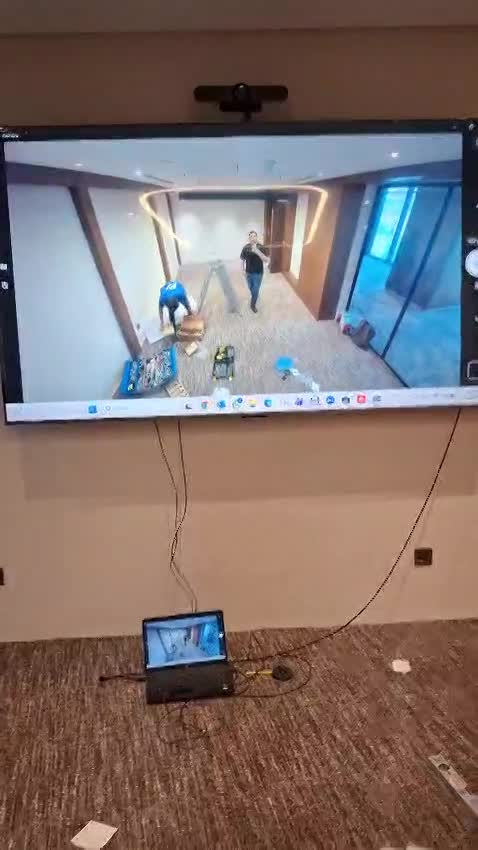
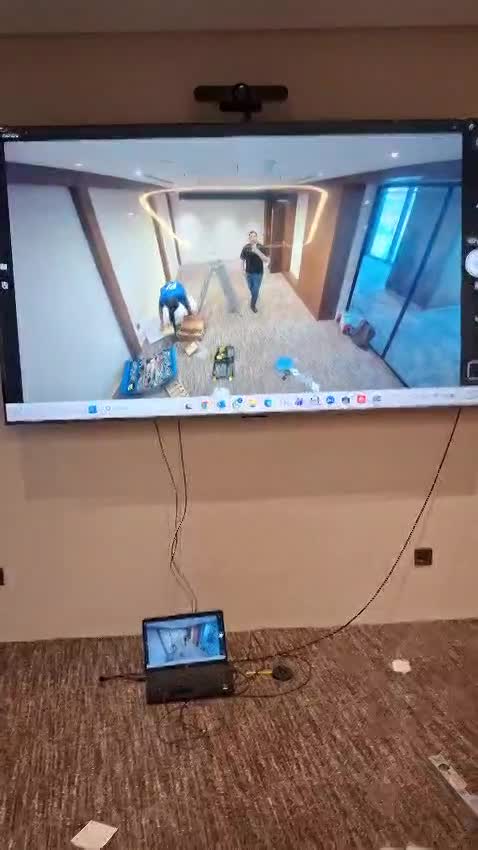
The project ran within a four-week contract duration across four rooms on three floors, coordinated with the main contractor's technical team and the owner's representatives. Work began with setting out the eighteen loudspeaker positions in the two main halls to a coverage designed for each room individually, running the AV network and installing switches and processors, in parallel with the LED wall's steel structure and the installation of cabinets, displays and cameras. Then came the stage that determines the outcome of a project like this: programming and on-site tuning. Touch panel interfaces were built around each room's operating modes, sources and destinations routed inside the processors, and the level of every loudspeaker and every microphone channel set inside the room with its actual furnishings. Microphones were tested at different positions including the critical ones directly beneath loudspeakers, and operating levels fixed where the system stays stable with margin in hand. Echo cancellation was calibrated by running real calls with a far end to verify that the remote speaker does not hear their own voice returned. Testing and commissioning were carried out in full coordination with the main contractor's technical team and the owner's representatives in line with project specifications, and the rooms were handed over with a testing and commissioning certificate and a three-year warranty on the sound system.
Results
Four hotel rooms, each with an acoustic design matched to its function: a big hall with ceiling coverage from twelve loudspeakers and three capture types for a moving presenter, a discussion hall with six loudspeakers and networked table microphones, a board room on a conferencing solution native to its platform, and an admin room with a display. Hybrid meetings run with no echo returning to the far end, rooms move between conference and workshop by changing a mode on a touch screen rather than re-cabling, and the AV network runs independent of the hotel's — all operated by an events coordinator in a minute. Delivered within a four-week contract duration with a three-year warranty on the sound system.
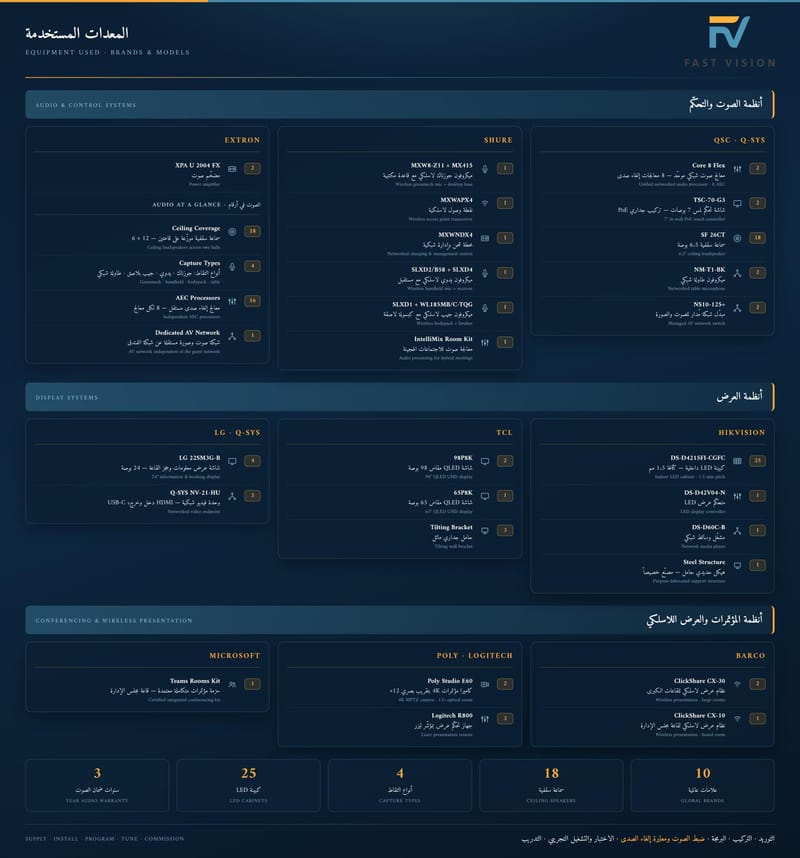
Equipment Used
QSC Core 8 Flex · QSC SF 26CT · Shure MXW8-Z11 · Shure SLXD · Extron XPA U 2004 FX · Hikvision DS-D4215FI-CGFC · Barco ClickShare CX-30 · Poly Studio E60
Get in Touch
Fast Vision is a communications and IT solutions provider based in Riyadh, Saudi Arabia. To implement an audio and conferencing system for your hotel's function rooms or your premises — with coverage designed per room, Q-SYS programming and on-site echo cancellation tuning, not merely supplied equipment — contact us for a site visit and assessment.