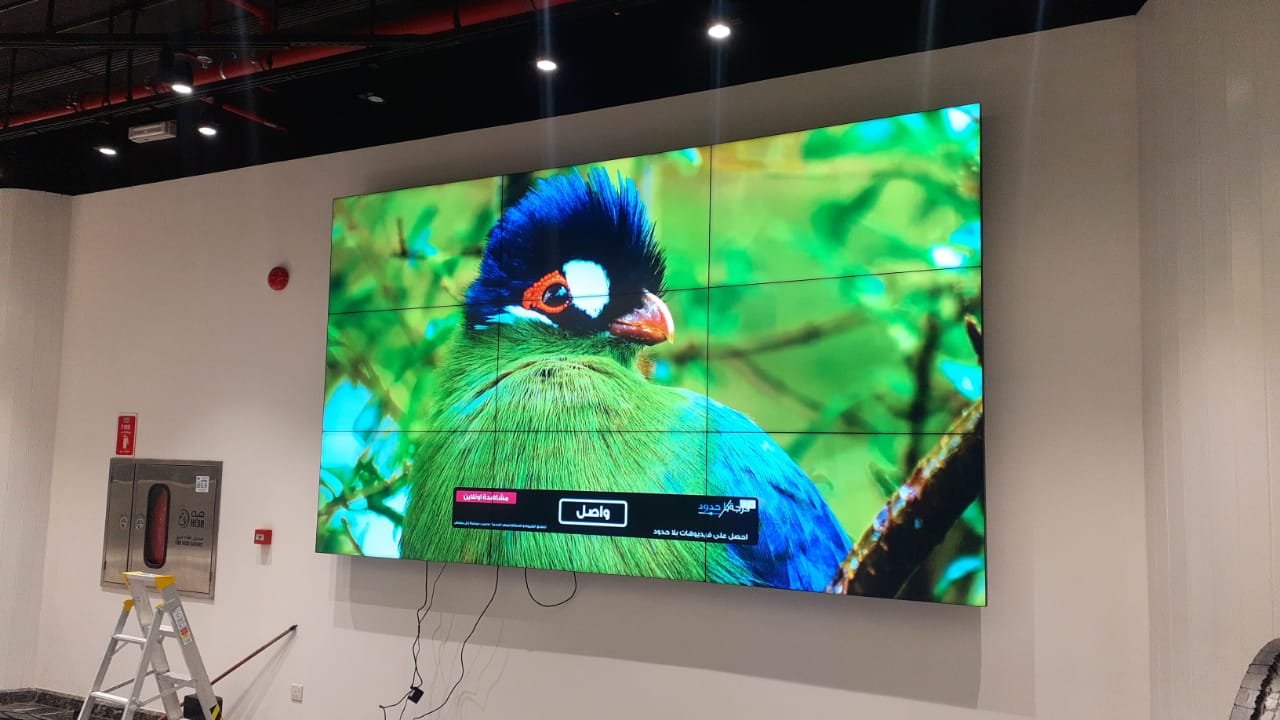
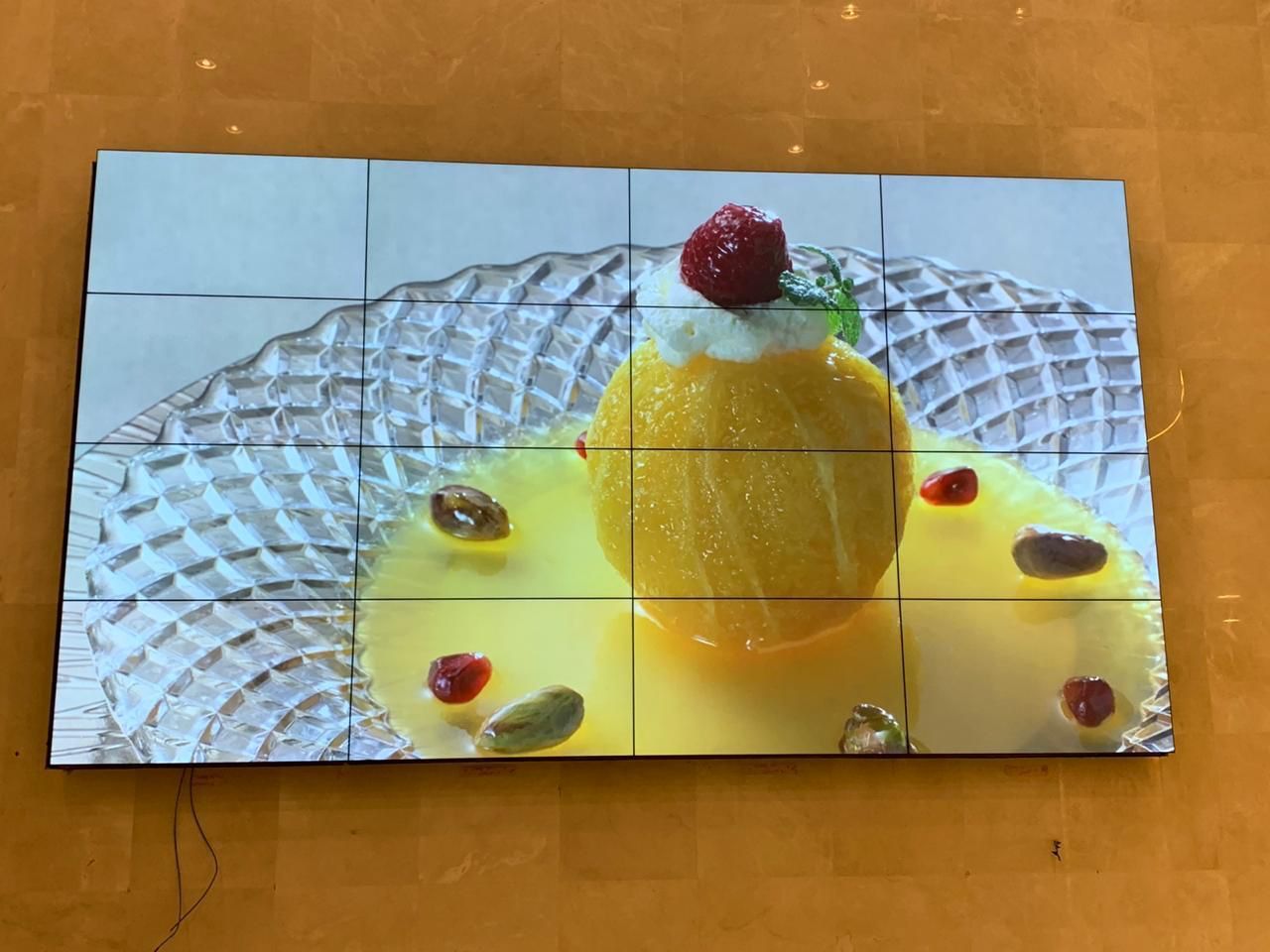
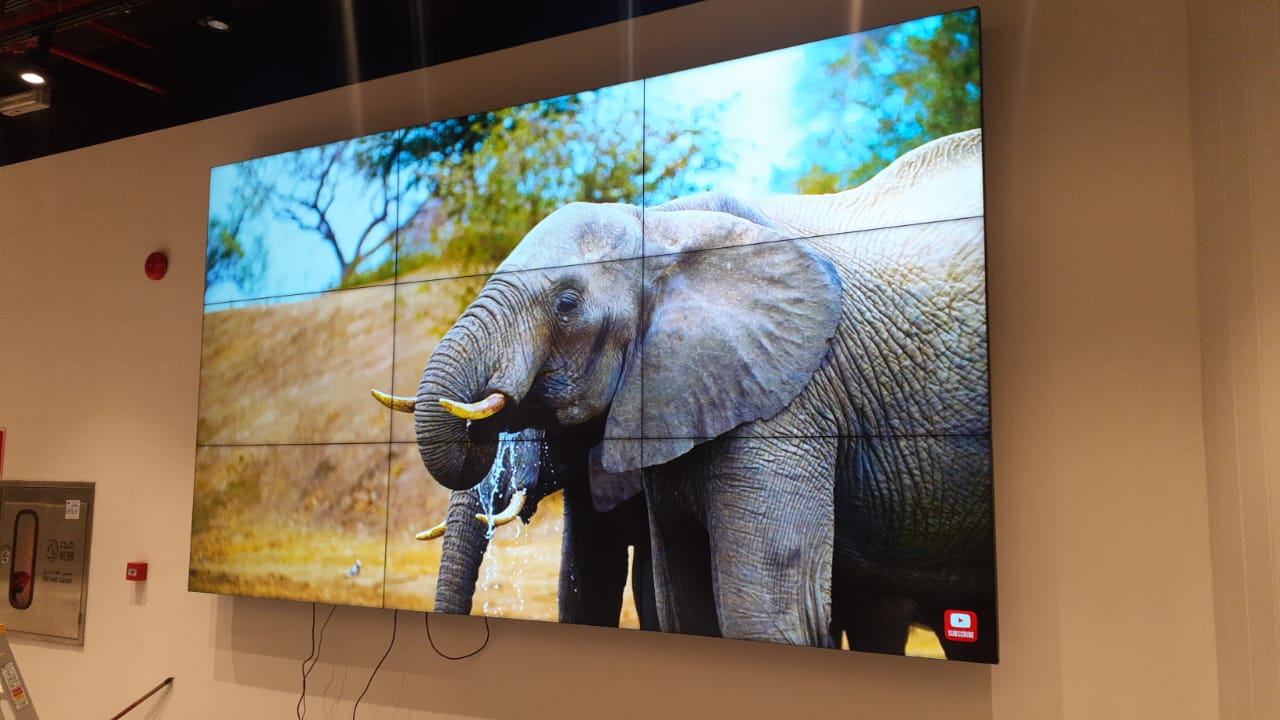
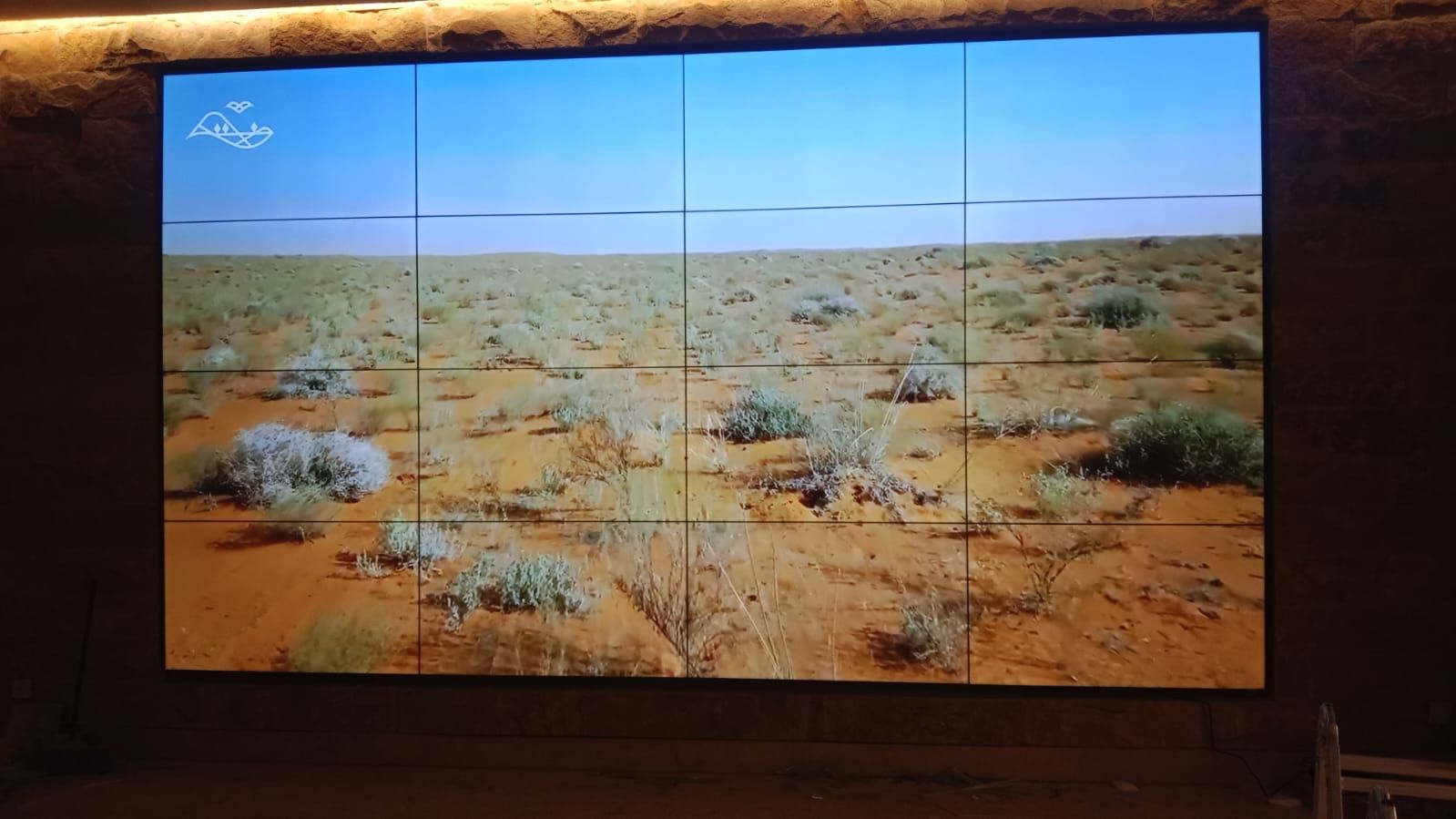
Video Wall Displays
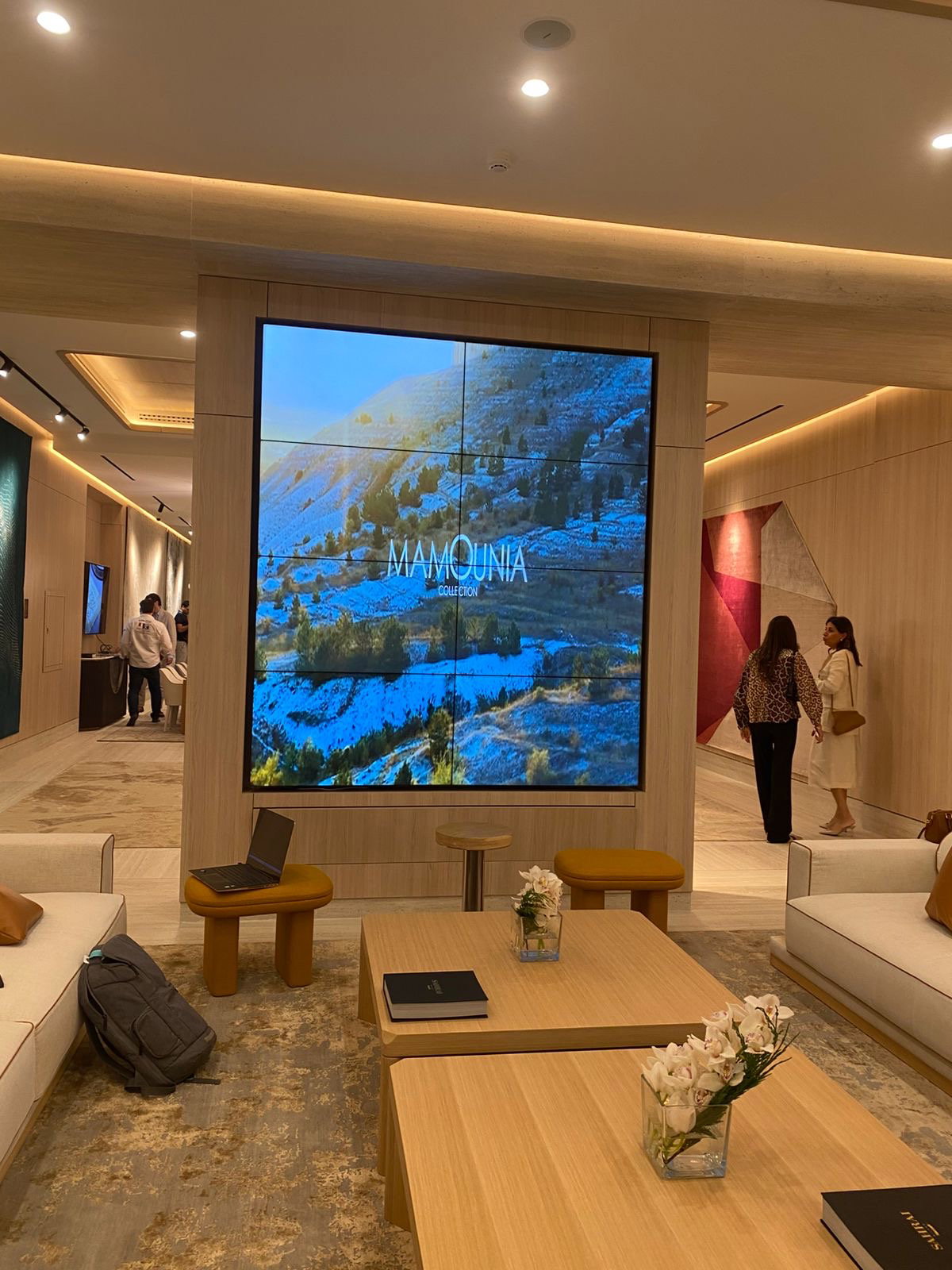
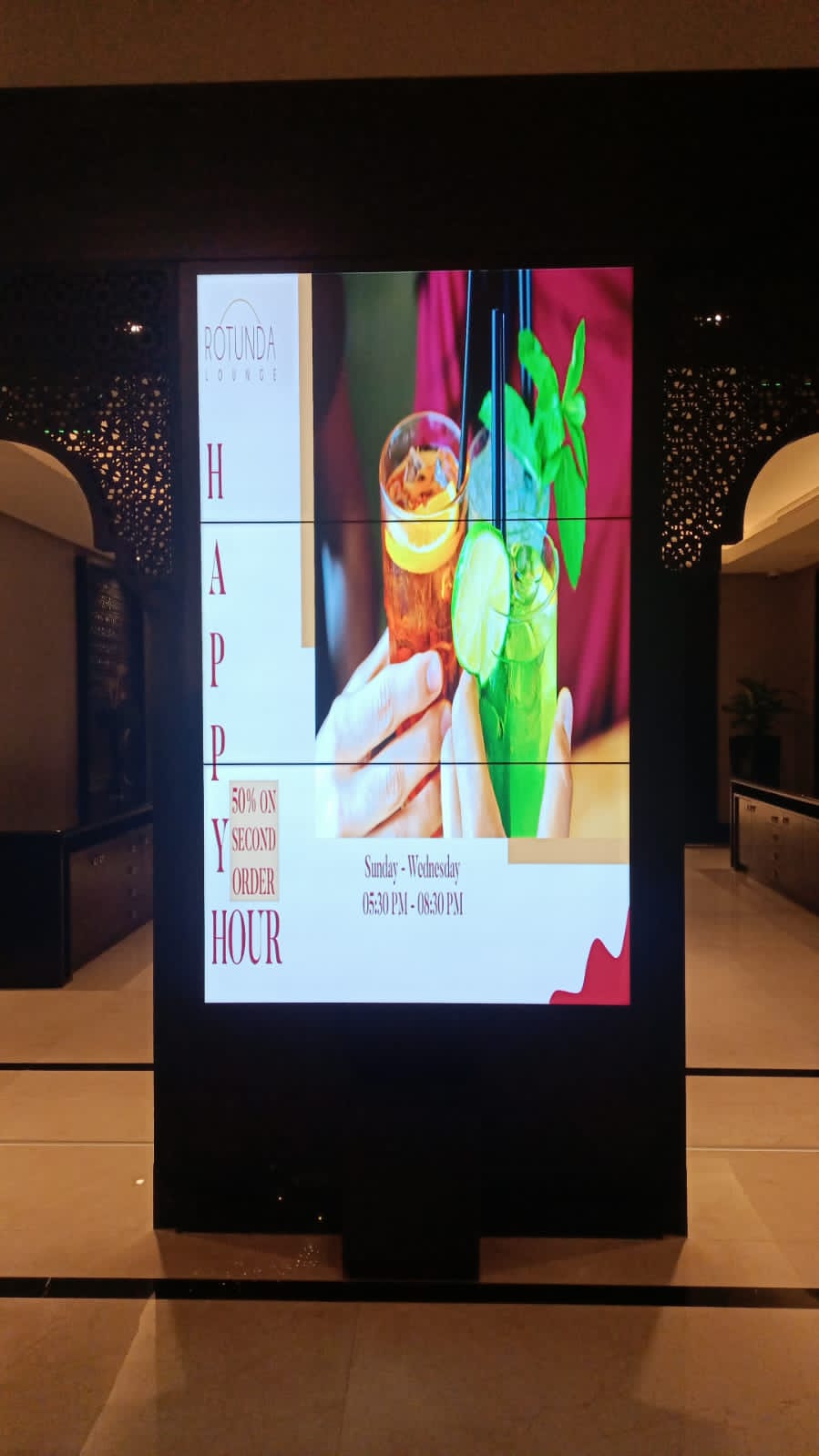
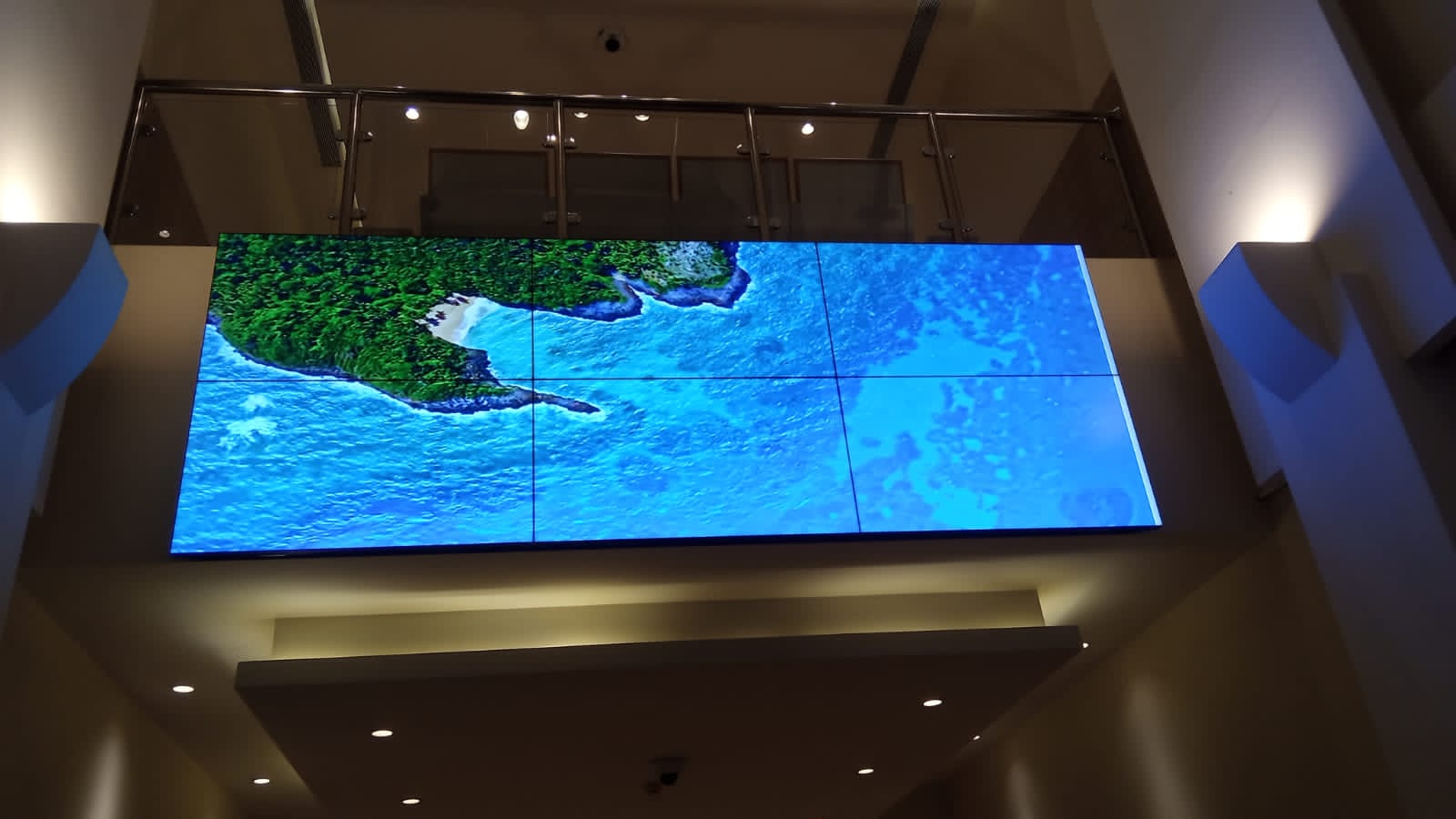
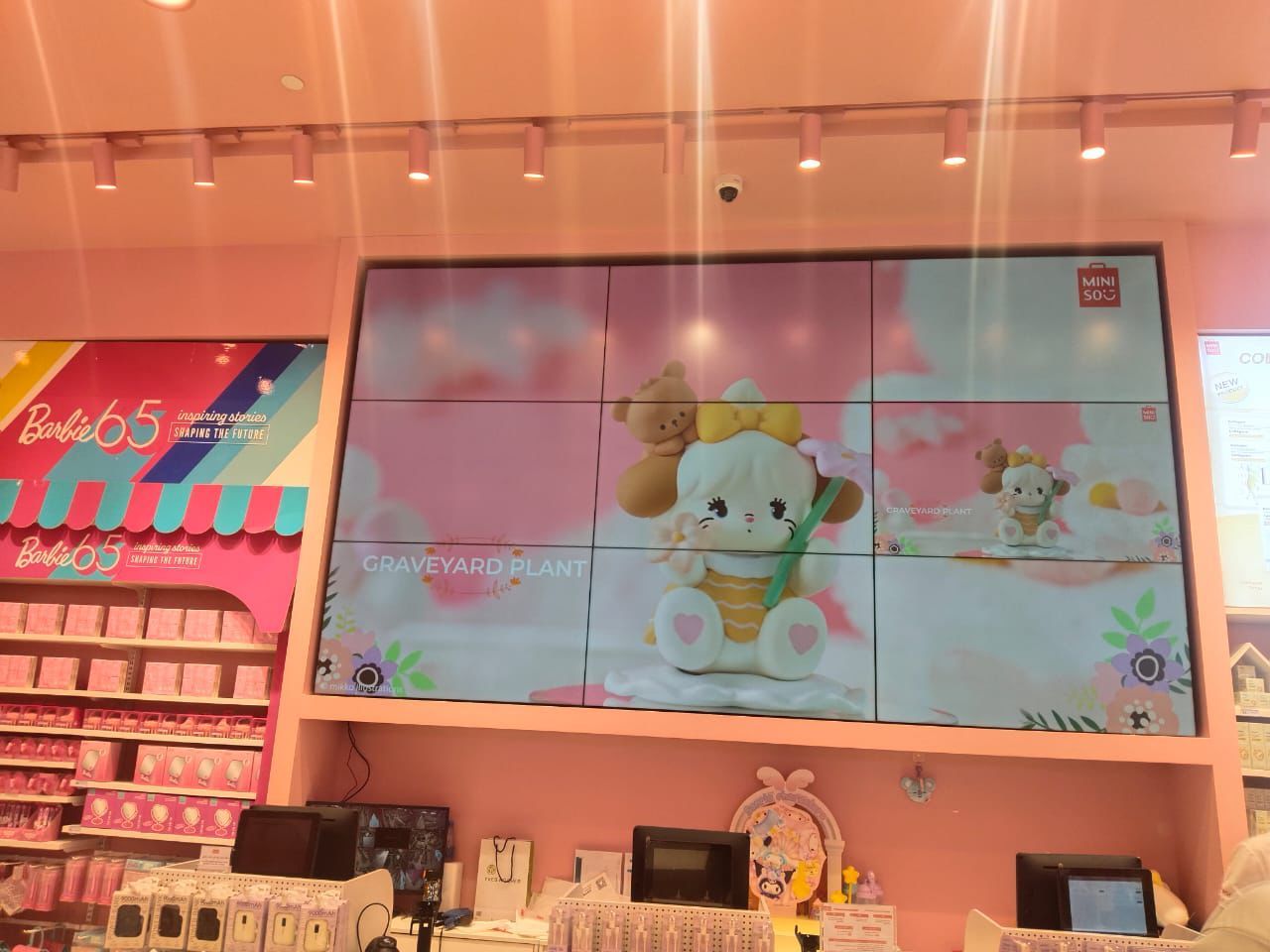
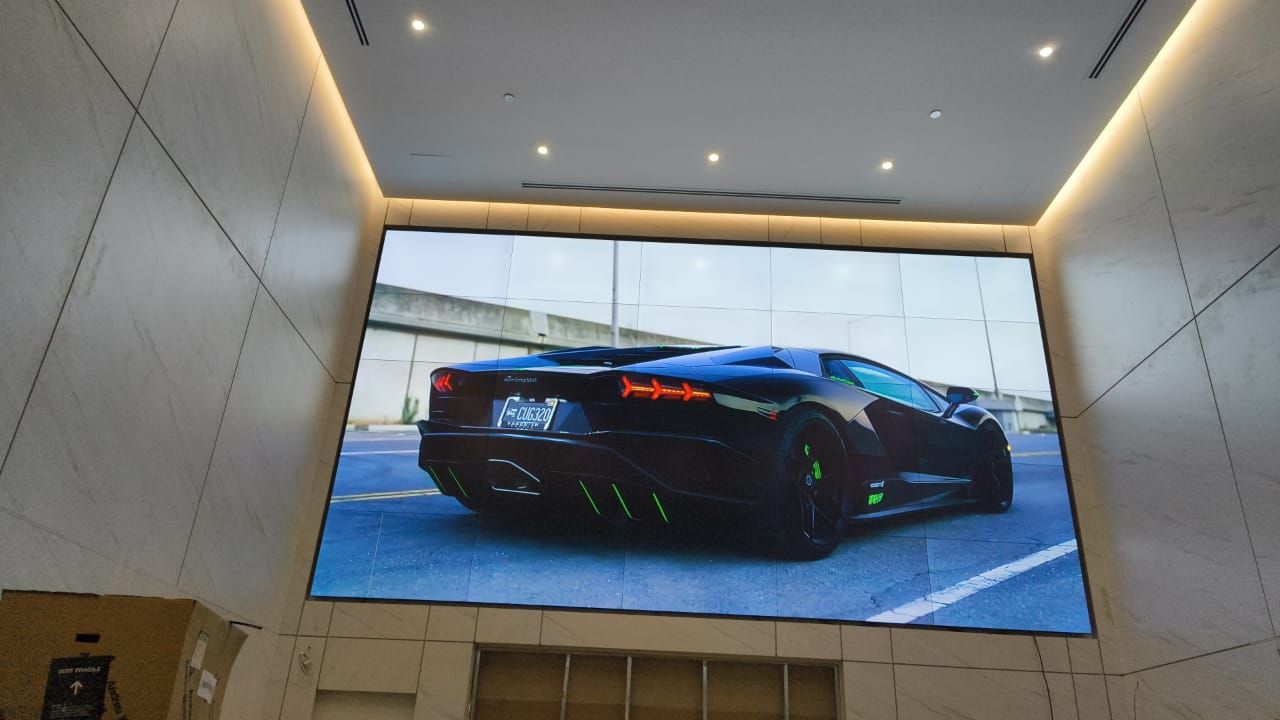
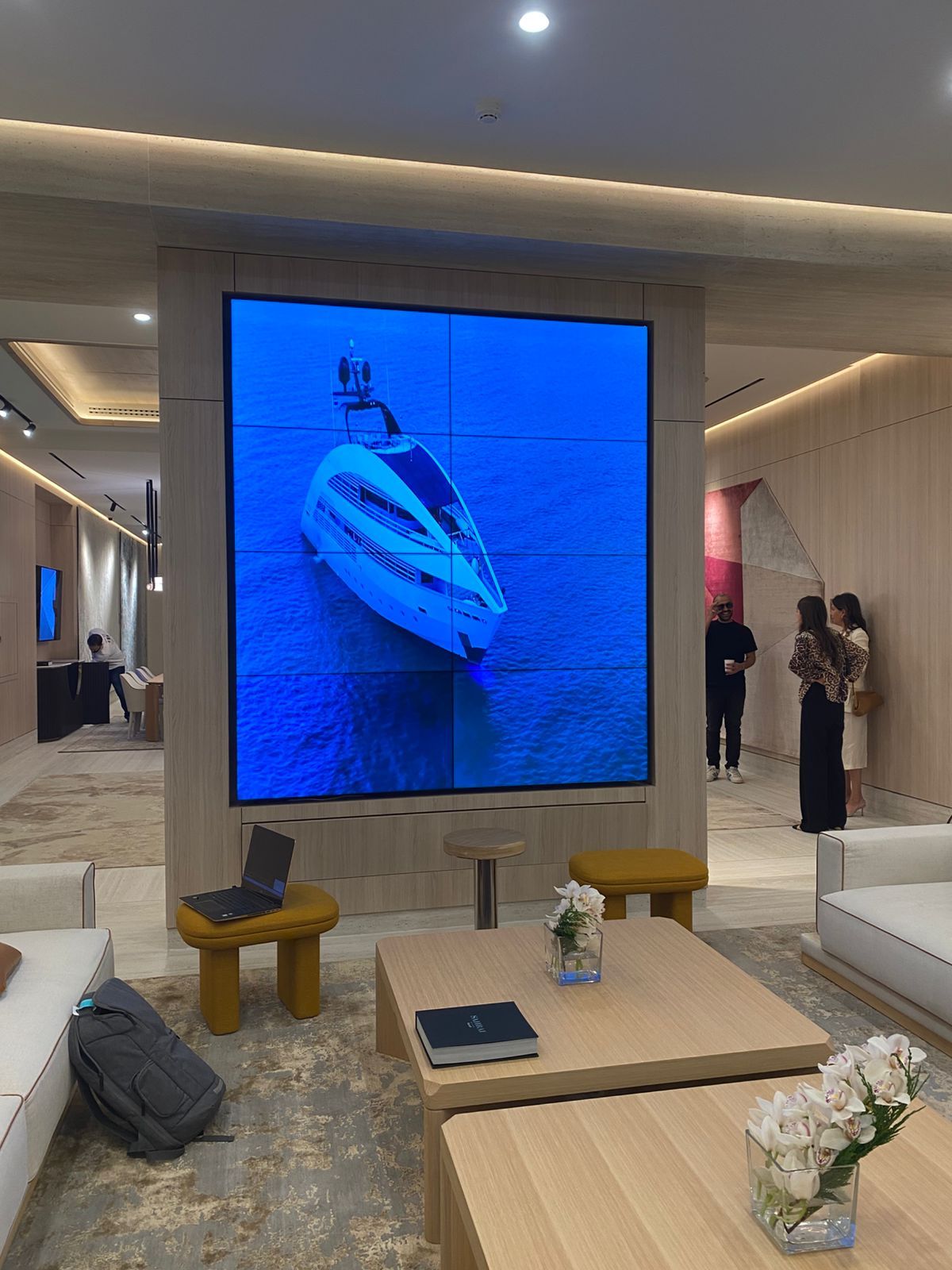
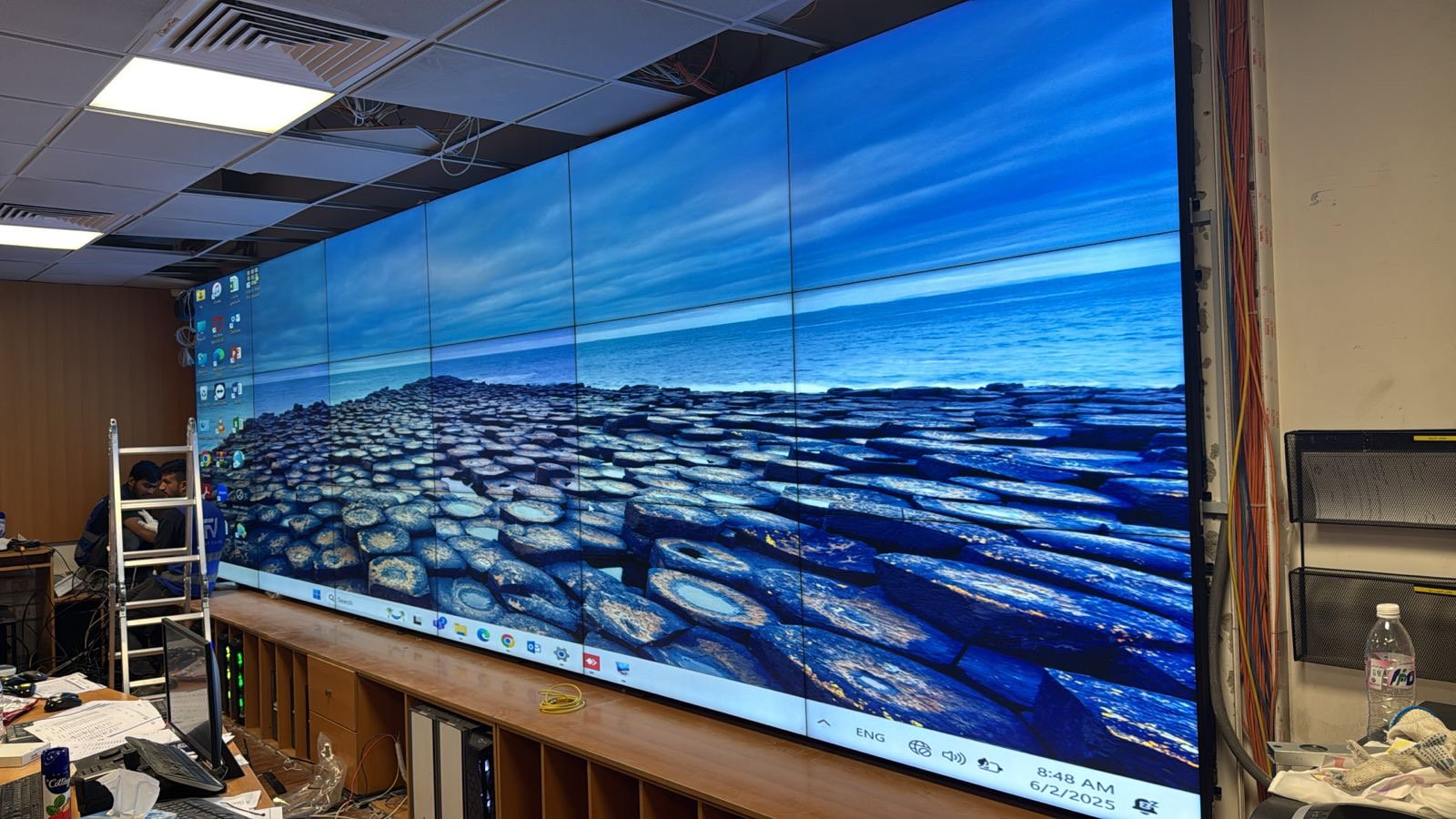
A video wall is not a big screen. It is a single canvas assembled from calibrated panels, driven by a controller that decides what appears where — and it has to hold that image identically, hour after hour, for years.Fast Vision designs, supplies, installs and calibrates video walls across the Kingdom, with panels from 0.88 mm bezel and controllers that accept HDMI, DVI, SDI, IP, NDI and ST 2110 sources. Control rooms, boardrooms, retail floors and transport hubs — from site survey to operator handover.
The seams. A consumer television carries a 10–15 mm frame on each side, so two of them meet at 20–30 mm of black. A video wall panel is built to meet its neighbour at 0.88 to 3.5 mm. The difference is not cosmetic: at 25 mm, a face crossing the join breaks apart.
The colours drift. No two consumer panels leave the factory identical, and they age differently. Within months one reads warm and another cool, with no way to correct them as a set. Video wall panels ship with factory calibration data and are re-calibrated together as one array.
The duty cycle. Consumer sets are rated for roughly 16 hours a day; a control room runs continuously. Run one 24/7 and the backlight degrades early — and the warranty typically excludes commercial use, so the replacement is yours.
There is no single image. Each television is a separate input with its own scaler. Nothing spans them as one canvas, nothing synchronises them frame to frame, and no source can be windowed across the array.
Service means dismounting. Video wall panels are front-serviceable: one panel is pulled from the face of the wall without disturbing the others. A failed television in the middle of a bracket array means taking the wall apart.
Brightness. A consumer set delivers 250–350 nits. A video wall panel delivers 500–700 — the difference between readable and washed out in a daylit lobby
SPECIFICATIONS
Display Sizes
46", 49", 55" and 65". 55" is the most specified size in commercial arrays
Bezel Width
From 0.88 mm bezel-to-bezel, through 1.8 mm and 3.5 mm — specified against viewing distance
Brightness
500 to 700 nits, so content stays readable under bright indoor and daylit conditions
Resolution
Full HD per panel, scaling into a 4K canvas across a 2×2 array and beyond
Viewing Angle
178° / 178°, holding colour accuracy from any position in the room
Operating Hours
Rated for 24/7 continuous operation, not 16 hours a day
Panel Lifespan
Around 50,000 hours of backlight performance — roughly six years of continuous use
ENGINEERING FEATURES
Array-wide colour calibration
Colour and luminance matched across the entire wall as one array, not panel by panel — and re-matched as the panels age.
Front-access service
A single panel is pulled from the face of the wall without disturbing its neighbours or dismantling the array.
Ultra-slim modular build
Shallow mounting depth with modular alignment, so the wall sits close to the structure and stays flat across its full width.
Multi-source signal input
Several sources displayed side by side, windowed, or scaled across the full canvas — switched by preset.
Fanless thermal design
Silent, low-noise operation with low energy draw — a requirement in boardrooms and staffed control rooms.
Built for continuous duty
Commercial panels and redundant controller hardware rated for operation that never switches off.
application
2. Design. Array shape and panel count, mount type, controller and card schedule, signal path drawing, and a bill of quantities you can price against.
3. Supply. Panels, mounts, controller and cabling from stock held in the Kingdom — lead time on a replacement panel is a live risk once the wall is operational.
4. Installation. Structural mounting, panel alignment to sub-millimetre tolerance, cable management, and front-service clearance.
5. Calibration. Colour and luminance matched across the full array. This is the step that separates a video wall from a grid of screens, and the step most often skipped.
6. Training. Operator handover on source switching, layouts and presets, with documentation.
7. Warranty and support. A local support team in Riyadh, spare parts held in the Kingdom, and defined response times.
PORTOFLIO