LED Screen Rental for LEAP Exhibition
Description
This project — 328.5 square metres of rental LED, across four distinct display geometries within an exhibition build in Riyadh — was executed on that basis: every decision in it, from the choice of cabinet to the number of controllers to the moment the test pattern went up, was taken against a single question — what happens if something fails while the hall is full?
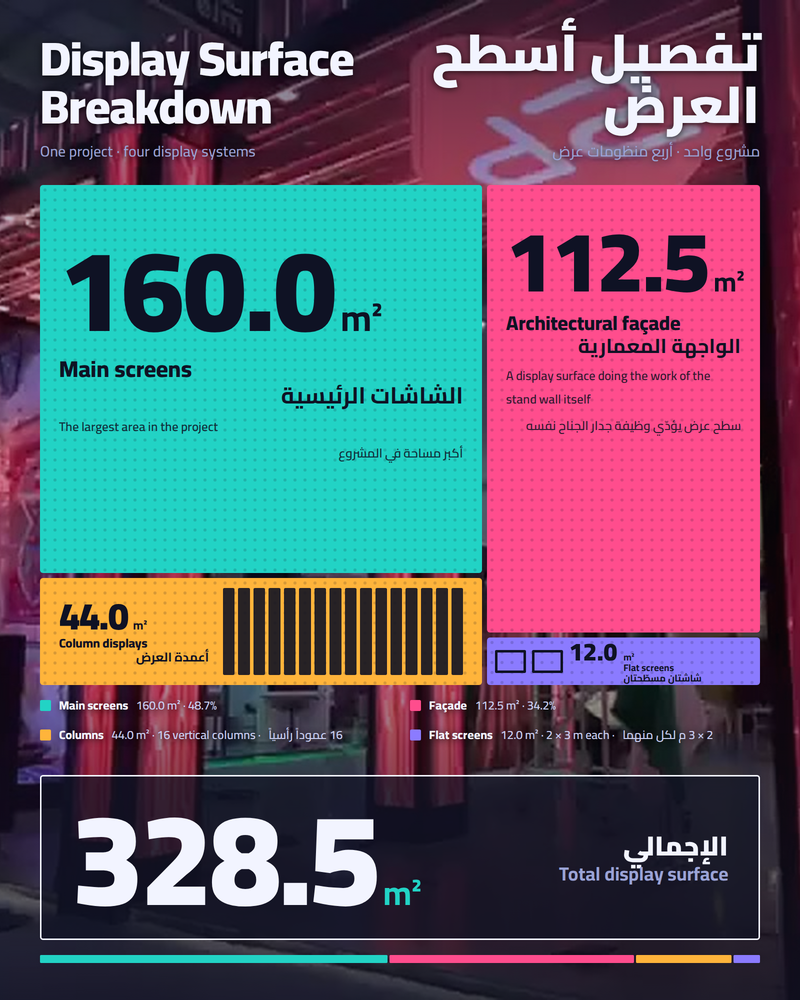
Display Surface Breakdown
The Challenge
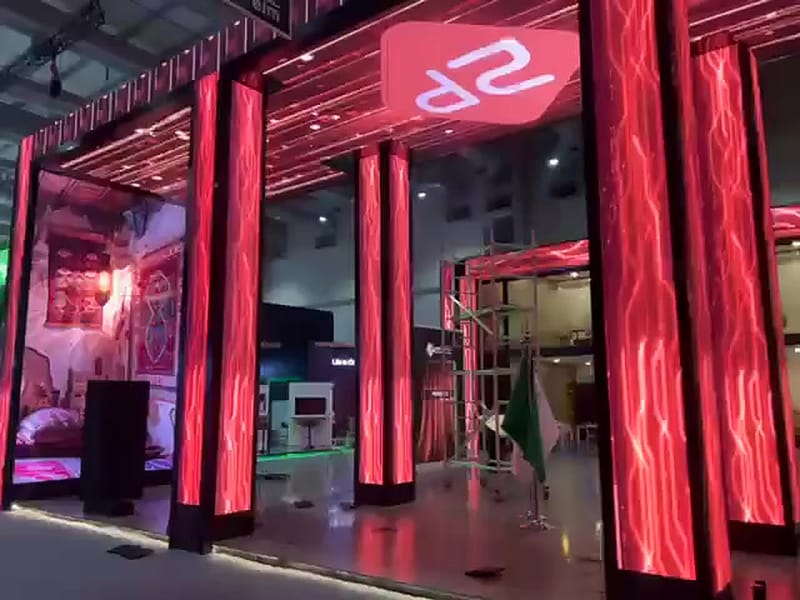
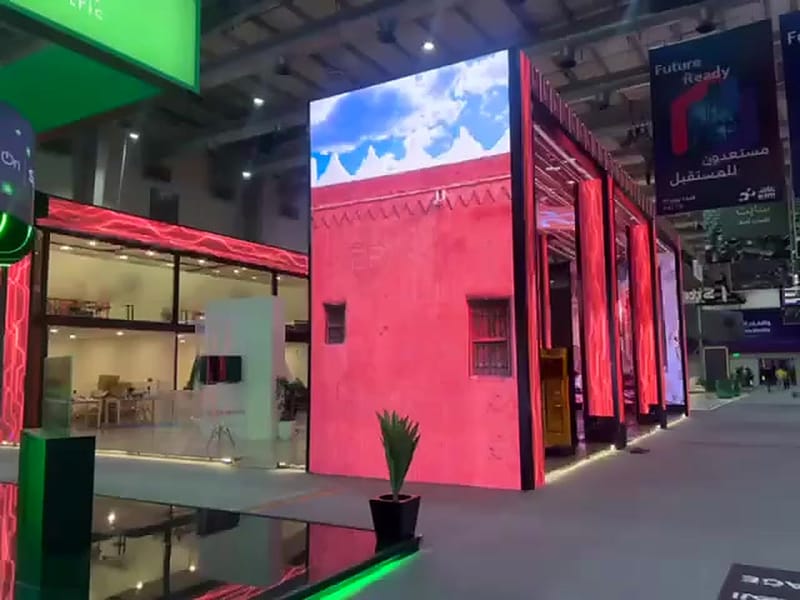
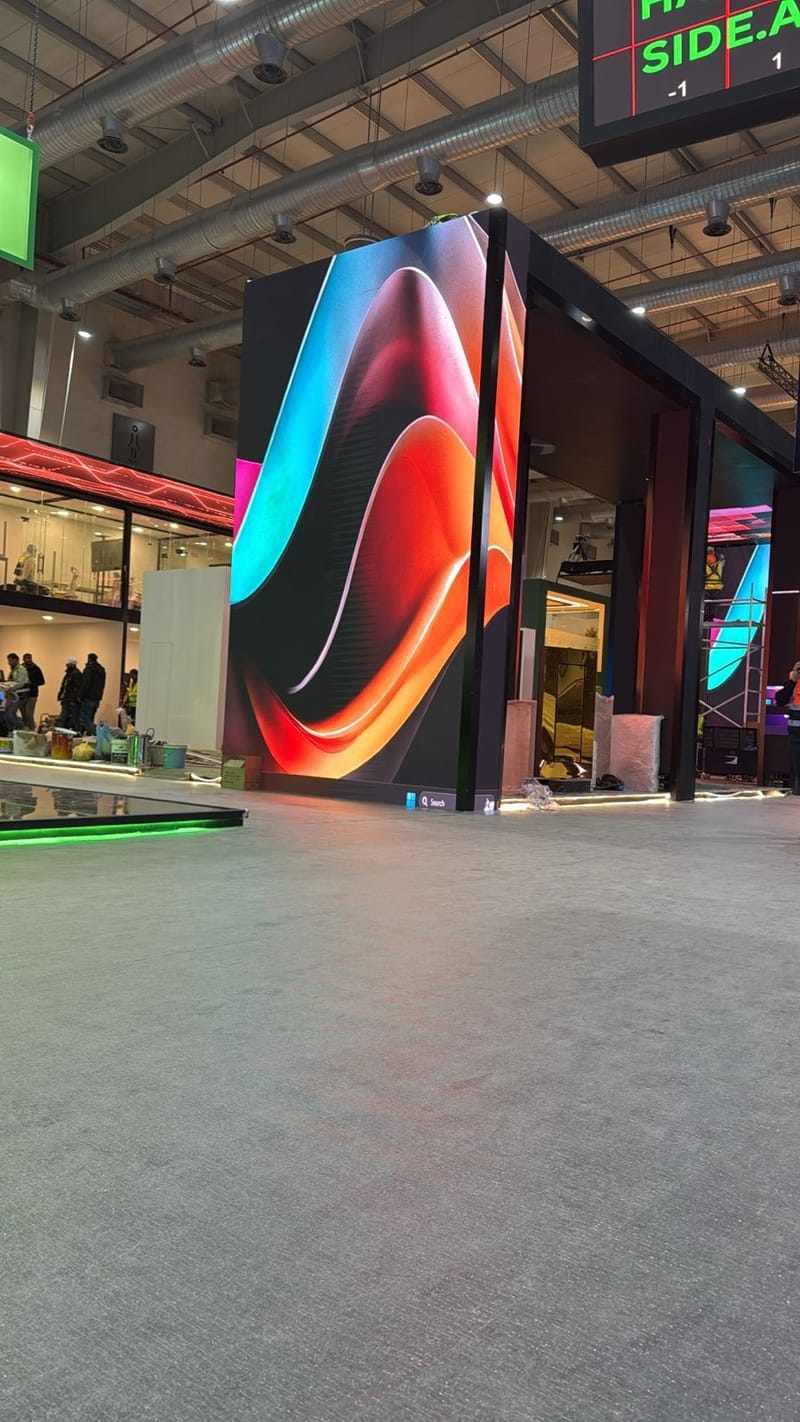
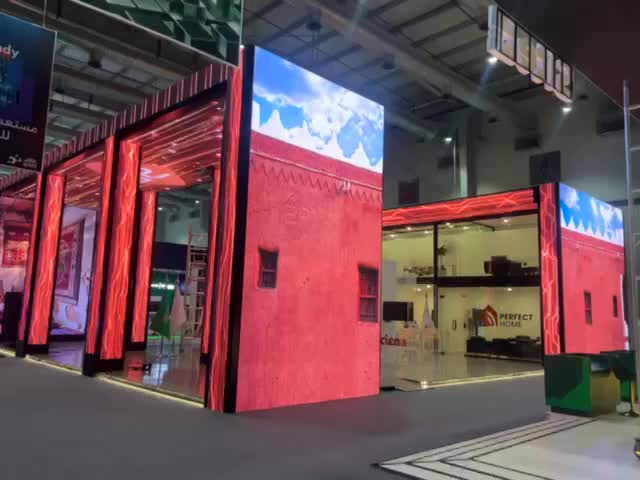
Three pressures meet on an exhibition rental, and no sequence solves one without costing the others. First, the date does not move. The opening is fixed months in advance, and the build window inside the hall is measured in hours set by the organiser, not the supplier. Anything deferred to "tomorrow" on an installed project is here deferred to after the event — which means never. Second, four different geometries have to read as one thing. A wide façade, large main screens, sixteen slender vertical columns and two flat panels. These surfaces differ in dimension, viewing distance and viewing angle, yet a visitor standing in front of the stand sees all of them in a single glance. Any difference in colour or brightness between one surface and the next reads immediately as a fault, not as a design choice. Third, the vertical column is the hardest rental geometry there is. A tall, narrow surface has the least structural tolerance and shows deviation most clearly: a degree of lean over the height of a column is visible to the eye, and a few millimetres of gap between two cabinets draws a line down its full height. And here it was not one column but sixteen — sixteen structures, sixteen power and data routes and sixteen content maps, each an independent chance to get something wrong.
The Solution
One cabinet system for the entire project. All 328.5 m² — façade, main screens, columns and flat panels — were built from a single cabinet model: the Hikvision DS-D4226RI-CQF. That is not an administrative simplification but a visual and operational decision: one system means one calibration standard across every surface, one spares pool that serves whichever surface develops a fault, and one controller family. Had the four systems come from four different cabinet platforms, the production-batch difference alone would have been enough to put one red on the façade and a slightly different red on the column beside it — and the eye catches that difference before it reads any content. Twenty-five controllers across four systems. The DS-D42V04-N units were distributed as two for the flat screens, eleven for the main screens, eight for the façade and four for the columns. The practical meaning of that distribution is that each system runs on its own sending path: if a path drops, part of one surface drops — not the whole stand. That is precisely the difference between a fault handled quietly and a dark stand in front of visitors. A façade instead of built architecture. 112.5 square metres of LED doing the job of the stand wall. The difference between a built façade and a displayed one is not appearance but what can be done with it: a built façade is fixed in the first hour and stays that way until closing, while a displayed façade changes between sessions, between morning and evening, and from one sponsor to the next, at the same cost. And at de-rig it leaves in flight cases rather than in a skip. The source chain inside our scope, not the client's. What most often darkens a screen at an exhibition is not the screen: it is a laptop that went to sleep, a player that lost sync, or a content resolution that does not map to the surface. So the scope included a video processing line and a media server within the rental itself, putting the whole image chain — from file to module — under one party's responsibility. Installation and de-rig are part of the product. On a rental the work does not end when the screen lights up; it ends when the hall is handed back empty, on time. Installation and de-rig were therefore inside the scope from the start, not an extra line to be negotiated once the show closed.
Execution
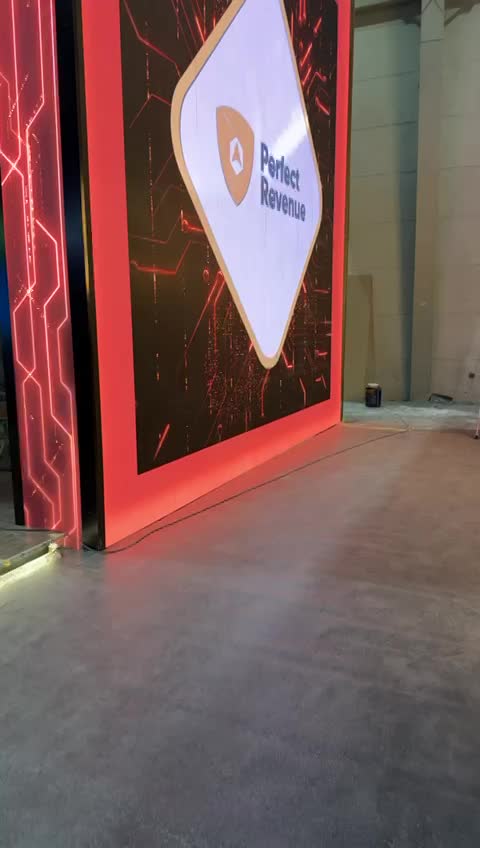
Work began inside the hall's allocated build window, alongside the stand's other contractors: erecting the support structures for the façade and columns, installing and levelling the cabinets, then running power and data and connecting the twenty-five sending units. Before the doors opened, every surface was driven with a full test pattern: a white grid across the façade and main screens, and primary colour bars down the columns. That is not a decorative shot — it is the one moment at which a dead module, a cabinet drifting in colour from its neighbours, or a path that is not receiving will reveal itself. Found in test, it means a quiet swap from the spares stock. Found after opening, it means somebody saw it. Once the surfaces passed, colour and brightness were aligned across all four systems so they would read as one, content was mapped per surface, and a crew stayed on site throughout the show. At closing, the whole system was de-rigged and the hall handed back.
The Result
The stand did not read as a stand with screens on it. It read as a stand built out of light: a façade carrying a complete piece of architecture, columns framing the entrance, main screens carrying the exhibitor's identity — and then all of it gone into flight cases within hours. That is what a client actually buys when renting screens for an exhibition: not 328.5 square metres of LED, but the assurance that the stand will be lit at the opening hour, that it will still be lit at closing, and that the hall will be handed back empty and on time.
Have an exhibition or event coming up?
Fast Vision supplies rental LED screens in Riyadh, Jeddah and across all regions of Saudi Arabia, with installation, operation and de-rig inside the show's own build window. Send us your stand dimensions and event dates and we will come back with a surface and area layout.